2 – When does education start?
3 – L’éducation ne dure qu’un temps ?
4 – Should you come as soon as he cries?
5 – How to teach him to be alone?
6 – What to do when you are away?
7 – Let your puppy jump on you?
8 – Should we ignore it on the return?
9 – Should we take him if he is scared?
10 – My puppy is refusing his kibble
11 – Should I put my hand in the bowl?
12 – My puppy no longer wants to respond to a command
13 – Does he know he’s done something wrong?
14 – He growls: should I punish him?
15 – Repeating an order several times
1 – Train your dog as if it were a child
We often hear: “I’m raising him like my own child.”
This is a common mistake.
Your dog doesn’t think human. He thinks…dog.
🐾 Why is this not suitable?
Dogs communicate:
-
through body language,
-
through postures,
-
through intonation,
-
through consistency of attitudes.
They don’t understand:
-
the lengthy explanations,
-
the speeches,
-
human reasoning.
Using human codes creates misunderstanding.
🎯 What to do?
-
Use clear and consistent canine codes.
-
Adjust your posture and tone.
-
Reward good behavior.
-
Be consistent in following the rules.
Humans must learn to understand their dogs, not the other way around.
Training and observation are essential keys.
To remember
Dog training is based on communication adapted to the species.
The more you speak “dog,” the more your dog understands you.
2 – Wait until your puppy is older to begin training
“He’s too young, we’ll see later.”
No. Learning begins at a very young age.
🐾 When does education begin?
It begins:
-
with the mother (social codes, self-control),
-
then at the breeder’s,
-
and continues from the moment he arrives in his new family.
A puppy is constantly learning, even when you’re not intentionally teaching it anything.
🎯 Why start early?
The first few weeks are crucial:
-
He discovers his environment.
-
He learns the rules of life,
-
He builds his confidence.
The longer you wait, the more bad habits can take root.
To remember
We don’t wait for the puppy to grow up to train it. We guide it from day one.
Education is not a stage: it is a continuous process.
3 – Thinking that education only lasts for a limited time
We often hear:
“He’s educated, that’s good.”
or
“He’s too old now.”
Education has neither a fixed start date… nor an end date.
🐾 Why is this idea wrong?
Dogs learn throughout their lives.
Each experience:
-
reinforces a behavior,
-
modifies another one,
-
or creates a new one.
Even unintentionally, you continue to train your dog every day through your reactions and consistency.
🎯 Can an adult dog be trained?
Yes.
At any age.
A puppy learns quickly.
An adult dog learns differently, but it learns.
What changes is not the ability to learn.
It’s sometimes the time required and the habits already ingrained.
To remember
Education is a continuous process.
This is not a period,
this is not an internship,
this is not “over”.
It is a relationship that is built and adjusted throughout the dog’s life.
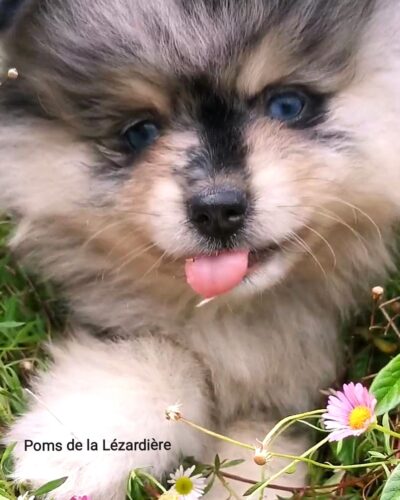
4 – Should you come as soon as he cries?
The answer is no… at least, not systematically.
If you intervene immediately when your puppy cries, it may associate:
“I cry → my owner arrives.”
The goal, however, is for him to understand:
“I am calm → my master returns.”
Learning to be alone is an integral part of training. A puppy must gradually learn to stay alone without stress.
How to proceed?
-
Place it in its basket, in a quiet place.
-
Leave him some toys.
-
Place an item of clothing with your scent inside to reassure him.
-
Leave the room for a few minutes.
If he cries, wait.
It’s important that he doesn’t see you come back while he’s vocalizing.
As soon as he calms down, even briefly, you can return to the room. He will then understand that calmness encourages your return.
Be careful though:
It is not about ignoring a puppy in prolonged distress, but about gradually teaching it that solitude is neither dangerous nor permanent.
Patience and consistency are essential. Absences should be short at first, then gradually increased.
5 – How to teach him to be alone?
Moving to a new home is a big change for a puppy. It needs time to adapt to its new environment and routines.
Learning to be alone should be a gradual and positive process.
🏠 The first steps
-
Settle your puppy into its corner, with its basket and toys.
-
Add an item of clothing that carries your scent to reassure him.
-
Wait until he is busy or quiet.
-
Leave the room for a few moments (start with 30 seconds).
Return calmly, without excessive emotion.
Don’t stare at him or make a big deal out of either his departure or his return. Simply resume your activities.
Then step back outside for a few moments.
You can stay nearby, without direct interaction. The puppy will naturally come to you. Then give him some time to play or cuddle, and don’t forget his regular walks.
⏳ Gradually increase the duration
Repeat the exercise several times throughout the day, gradually increasing the time spent away.
The puppy needs to learn that:
-
Your departure is normal.
-
Your return is certain.
-
Loneliness is not a worrying situation.
Over the course of several days, the absences may gradually become longer.
🎯 The objective
When you actually have to leave the house (work, shopping…), your puppy will already be used to being alone for a while.
He will know how to occupy himself with his toys or rest calmly.
Learning to be alone is based on three essential principles:
-
Progressivity
-
Calm
-
coherence
A reassured puppy will become a calm dog.
6 – Don’t be too predictable when you leave
The puppy is constantly observing you. It analyzes your habits, your gestures, and the sequence of daily actions.
If the routine is the same every morning (getting ready, shoes, bag, coat…), your child will eventually associate these cues with your departure. This anticipation can generate stress even before you leave the house.
The goal is therefore to make your departures more neutral and less predictable.
🏠 How to proceed?
-
Continue to teach him to stay alone gradually (see question 5).
-
A few minutes before leaving, calmly settle him in his corner with his basket and toys..
-
You can add a t-shirt with your scent on it.
-
Soft music or occupational toys can also help him relax.
Then, finish your preparations as usual and leave without any special ceremony.
🚪 The departure must remain ordinary
It is not necessary:
-
to go back and see him one last time,
-
to give him a long goodbye hug,
-
nor to express your concern.
Your approach should be simple and natural.
If he has everything he needs (water, comfortable bedding, a safe environment), he can stay alone without worry.
🎯 Why is this important?
Des départs trop ritualisés ou chargés d’émotion peuvent favoriser :
-
hyperattachment,
-
separation anxiety,
-
the barking,
-
or the destruction of objects.
A calm and neutral departure helps the puppy understand that your absence is normal and temporary.
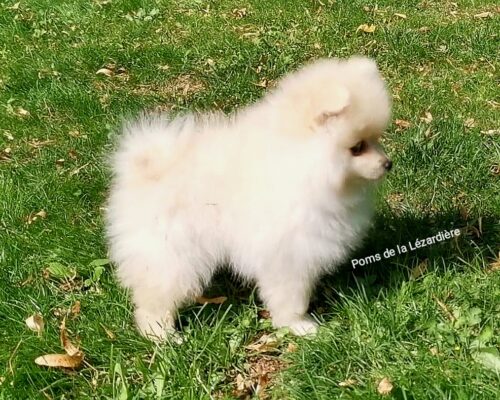
7 – Should you let the puppy jump on you when you arrive?
The answer is no.
A simple principle in education:
Don’t allow today what you won’t want tomorrow.
A jumping puppy may seem endearing… but a jumping adult dog can become intrusive, or even dangerous, especially with children or the elderly.
🐾 How to react?
If your puppy jumps:
-
Don’t look at it.
-
Don’t talk to him.
-
Don’t touch it.
-
Turn slightly to the side or turn your body away.
The goal is not to reinforce the behavior through your attention.
As soon as the puppy puts all four paws on the ground, calmly praise it. You can then:
-
speak to him gently,
-
caress it,
-
or reward him.
He will gradually understand that calmness and having all four paws on the ground attract your attention, not jumping.
🎯 The objective
Your return should remain a pleasant, but controlled, experience.
By remaining consistent and steady, you teach your puppy a simple rule:
attention is obtained through calm behavior.
This is how you build a polite and balanced dog.
8 – Should you ignore your dog on the way back?
We often hear that you should completely ignore your dog when you get home.
In reality, it’s not about ignoring it… but about not reinforcing the excitement.
When you come home, your dog may be very excited: wagging its tail, jumping up and down, vocalizing. This behavior is normal. What matters is how you respond to it.
🐾 The right attitude
Upon arrival:
-
Enter calmly.
-
Put your belongings down without rushing.
-
Avoid high-pitched voices and sudden movements.
-
Do not encourage jumping or restlessness.
If your dog is very excited, simply wait for him to calm down.
Once he has all four paws on the ground and is more composed, you can then:
-
greet him,
-
stroke him calmly.
-
speak to him gently.
This rewards calmness, not excitement.
🎯 Why is this important?
If you react with excessive enthusiasm, you risk:
-
to maintain hyper-excitement,
-
to reinforce hyper-attachment,
-
to accentuate the contrast between your absence and your return.
A simple and calm return helps your dog understand that your comings and goings are part of the normal routine.
in short
You shouldn’t ignore your dog on principle.
You should ignore restlessness and value calmness.
It’s this nuance that makes all the difference.
9 – Should we pick him up or comfort him as soon as he is scared?
The answer is nuanced.
If you react excessively to a minor fright, you risk unintentionally reinforcing the feeling of fear. By immediately picking them up or insistently reassuring them, they may associate the situation with a real danger.
The goal is not to ignore your dog, but to teach him to gradually manage his emotions.
🐾 What the mother naturally does
When a puppy hears an unusual noise, it observes its mother’s reaction.
If she remains calm, the puppy understands that there is no danger and relaxes in turn.
The puppy thus learns to analyze its environment by referring to the adult’s attitude.
🎯 How to react?
Faced with mild fear:
-
Stay calm.
-
Adopt a relaxed posture.
-
Avoid sudden movements and worried voices.
-
Continue your activity as normal.
You can then distract him with a game or an enjoyable activity.
Your attitude should convey a simple message:
“Everything is fine, there is no danger.”
Beware of genuine distress
It’s not about leaving a dog in a state of deep panic without support.
In cases of intense fear (violent storm, trauma, truly stressful situation), assistance may be necessary, but always with calm and control.
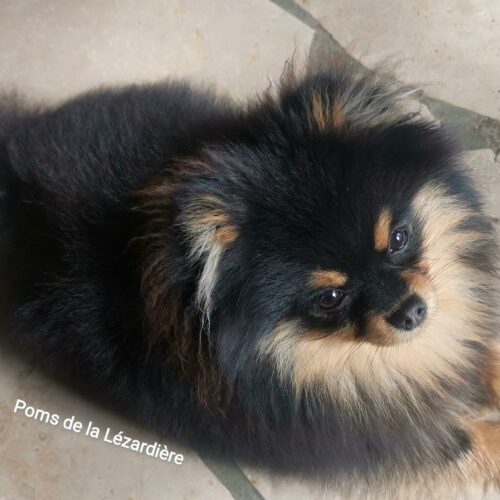
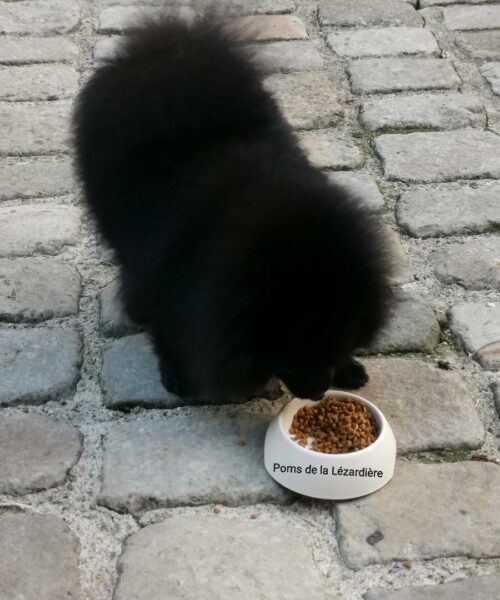
10 – My puppy is refusing his kibble: should I give him something else?
It can happen that a puppy occasionally refuses its kibble, especially if it has recently tasted more palatable foods.
Dans la majorité des cas, il ne s’agit pas d’un caprice grave, mais d’un comportement d’apprentissage : le chiot teste.
🐾 How to react?
-
Offer the food bowl at fixed times.
-
Leave it for 20 to 30 minutes.
-
If the puppy doesn’t eat, remove it without comment.
-
Offer it again at the next meal.
A healthy puppy won’t starve itself.
If it skips a meal, it will usually come back to eat at the next one.
Important rules
-
Avoid immediately replacing kibble with a more palatable food.
-
Don’t give in to the persistent stare.
-
Do not share your meal.
It’s not a question of “hierarchy” or challenge, but of consistency.
If the puppy learns that refusing gets him something better, he will repeat that behavior.
⚠️ However, if the refusal persists for several meals, is accompanied by lethargy, diarrhea or vomiting, consult a veterinarian.
A stable diet contributes to the puppy’s well-being.
11 – Should I put my hand in his food bowl?
No, it is not necessary to disturb a dog while it is eating.
Leave him alone during his meal.
Just like with humans, mealtimes should be calm.
🐾 So why do we talk about “hand in the bowl”?
The goal is not to provoke or test the puppy, but to gradually accustom it to your presence.
A good method is to:
-
approach calmly,
-
Add some kibble to the bowl.
-
to leave calmly.
The puppy will associate your approach with something positive.
What to avoid
-
Retirer la gamelle sans raison.
-
stare intently at him while he eats.
-
Handle it abruptly.
These behaviors can, on the contrary, create mistrust.
The goal is to have a dog that eats calmly and accepts your presence without tension.
12 – My dog has done something wrong: I gave him a command and he no longer responds to it.
Sometimes a dog stops responding to a command that it previously knew well.
In many cases, this is easily explained:
the dog has associated the command word with a negative experience.
For example :
-
You raised your voice,
-
You were angry,
-
The order was followed by a punishment.
-
or the context was stressful.
The dog does not associate the word with “exercise”, but with the emotion experienced at the moment it heard it.
🐾 Why isn’t he responding anymore?
If the word has been repeated with tension or frustration, it can become predictive of something unpleasant.
The dog can then:
-
hesitate,
-
to slow down,
-
avoid,
-
or ignore the order completely.
This isn’t stubbornness, nor is it a challenge.
It’s a negative association.
🎯 What to do?
-
Change the command word.
Use a new, neutral term. -
Resume learning calmly, as if you were starting from scratch:
-
in a quiet environment,
-
with positive reinforcement,
-
without pressure.
-
-
Value every success.
Over time, the new word will be associated with a positive experience.
To remember
An order should always remain associated with something clear, consistent, and secure.
If negative emotion takes over, learning is compromised.
Education is based on consistency, patience and calmness… much more than on authority.
13 – Does he know he’s done something wrong?
It’s a phrase we hear very often:
“He knows he’s done something wrong, you can see it on his face!”
In reality, dogs do not experience guilt like humans.
When he lowers his ears, avoids eye contact, or adopts a low posture, he is not saying:
“I know I did wrong.”
He said something like:
“Your attitude has changed; I sense tension.”
🐾 What he actually understands
The dog lives in the present moment.
He cannot make the connection between a past mistake and an anger that arises later.
If he caused destruction in your absence, he doesn’t make the connection between:
-
your return,
-
your anger,
-
and the past action.
It simply reacts to your posture, your voice, your energy.
Its signals (averted gaze, low posture, tucked tail) are signals of appeasement, not guilt.
🎯 How to react to a “stupid” act?
-
Never scold a dog for an act committed in your absence.
-
Clean it up, no comment.
-
Look for the cause: boredom, anxiety, lack of exercise, too long an absence?
Education is only effective at the precise moment of the behavior, not several minutes or hours later.
To remember
The dog isn’t trying to provoke you.
He doesn’t plan his mischief.
It acts according to its needs, its level of learning, and its environment.
Understanding this profoundly changes the relationship.
14 – My dog is growling: should I punish him?
No. Punishing a growl is a mistake.
Growling is a warning signal.
It’s the dog’s way of saying:
“I’m not comfortable.”
🐾 Why shouldn’t we punish?
If you punish the growling, you remove the signal… but not the emotion.
The dog can then learn to stop warning and go straight to biting.
A dog that growls is a dog that is communicating.
🎯 So what should we do?
-
Stay calm.
-
Analyze the situation.
-
Identify the cause: pain? fear? resource guarding? misunderstanding?
-
Work on the underlying problem.
The growl is valuable information.
It should be listened to, not suppressed.
15 – Repeating an order several times
“Sit…sit…sit…SIT!” »
By repeating the command, the dog mainly learns… that it can wait until the 4th or 5th time.
🐾 Why is this a mistake?
A repeated command becomes background noise.
The dog no longer pays attention to it.
He learns that the first application is not mandatory.
🎯 What to do?
-
He learns that the first application is not mandatory.
-
Wait a few seconds.
-
Help the dog succeed if necessary.
-
Reward immediately.
An order = a clear request.
16 – Lack of consistency in the rules
One day the sofa is allowed. The next day it is forbidden.
For the dog, it’s incomprehensible.
🐾 Why is this a problem?
Dogs learn through repetition and consistency.
If the rules change depending on mood or situation, they cannot learn properly.
🎯 What to do?
-
Set simple rules.
-
Always apply them.
-
Make sure that all family members respect them.
La cohérence rassure le chien.
17 – Lacking patience
A puppy cannot control itself like an adult.
He explores, tests, learns.
🐾 Why is this important?
Impatience creates:
-
tension,
-
confusion,
-
Sometimes fear.
Learning takes time and repetition.
To remember
Most educational “problems” stem from:
-
due to a lack of consistency,
-
due to poor communication,
-
or expectations that are too high.
Education rests on three pillars:
Clarity.
Calm.
Constitude.

More information
Why the positive method?
How to teach your puppy the first essential words?

