
I – What is a Pomeranian?
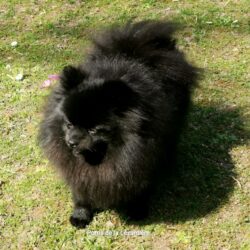
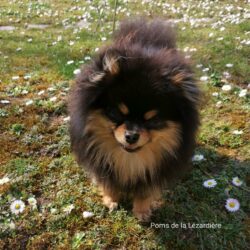
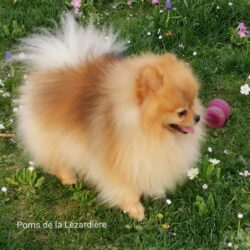
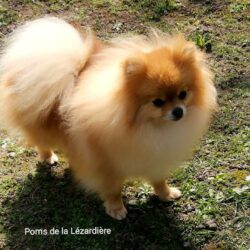
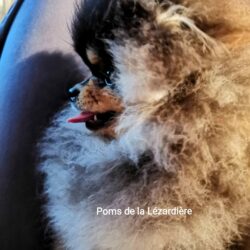
The Pomeranian is a small dog with an elegant physique and a lively gait. It is distinguished by its very dense and abundant coat, compact body, small, erect ears, and short to medium-length muzzle.
Despite its small size, it has a strong bone structure and a confident stride that give it a commanding presence.
Its lifespan is generally between 14 and 15 years, and some individuals can reach 16 or even 17 years with good care.
II – What is the difference between a Dwarf Spitz and a Pomeranian?
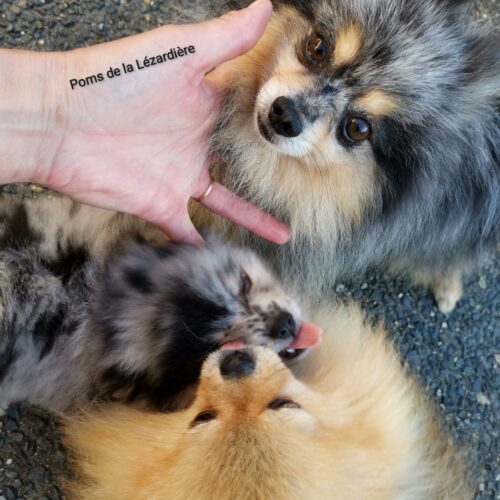
Over the years, through selective breeding, some breeders have developed a more distinctive type of Spitz: the Pomeranian.
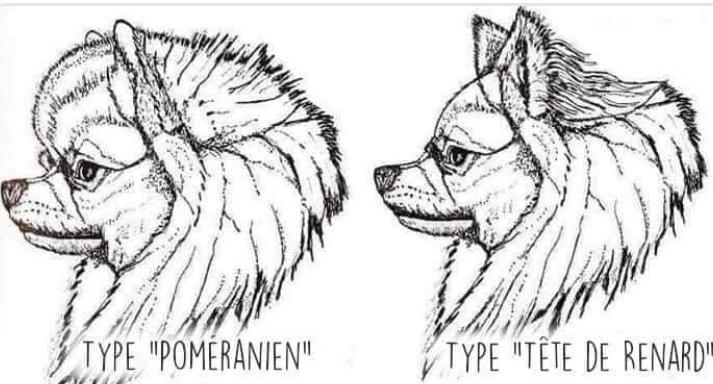
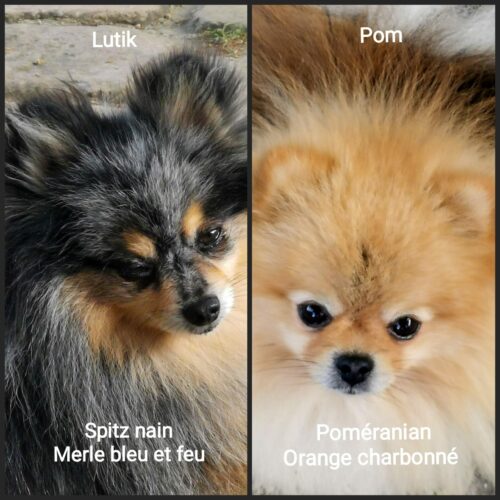
The main difference between the Spitz and the Pomeranian is noticeable in their heads and expressions. The Pomeranian generally has:
a shorter muzzle,
a more rounded (domed) skull,
smaller, rounder ears,
a profuse and voluminous coat,
a more compact bone structure, with legs that often appear thicker.
The Spitz, on the other hand, retains a type closer to the original breed standard, with a slightly longer muzzle and a somewhat less compact build.
It is important to note that, depending on the country and official breed standards, the term “Pomeranian” may be considered a marketing term for the Spitz rather than a distinct breed.
FCI
The FCI (Fédération Cynologique Internationale) defined the official breed standard for the Pomeranian on September 4, 2019.
According to this standard, the ideal height is 21 cm at the withers, with a tolerance of ± 3 cm.
The term “Pomeranian” is not recognized as a distinct breed in France by the FCI. It is considered a name related to the Pomeranian type.
In some countries, such as the United States, the Pomeranian is, however, recognized as a separate breed by national kennel clubs.
In France, no official distinction is made between the Pomeranian and the Spitz: they are governed by the same breed standard.
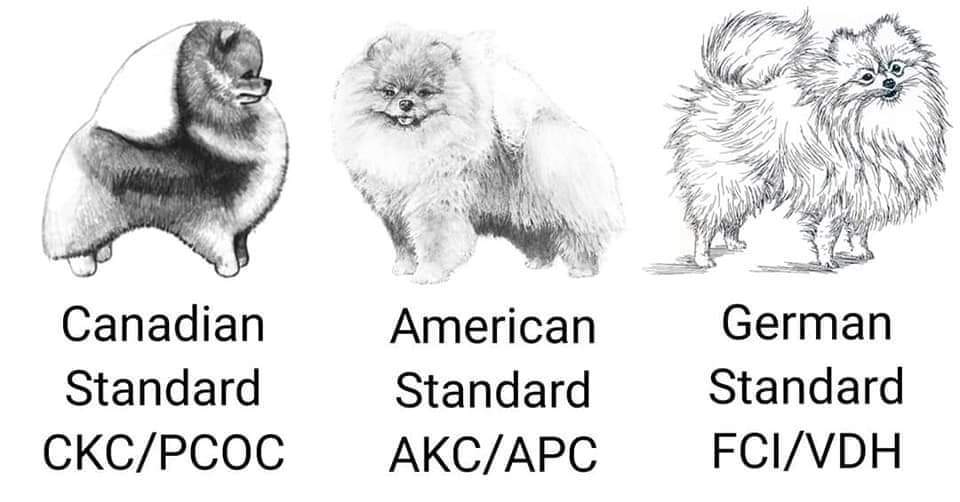
III – Why do Pomeranians have different types?
Over the years, some breeders have focused their selection on specific physical characteristics. The observed differences therefore depend on each dog’s bloodline and genetics.
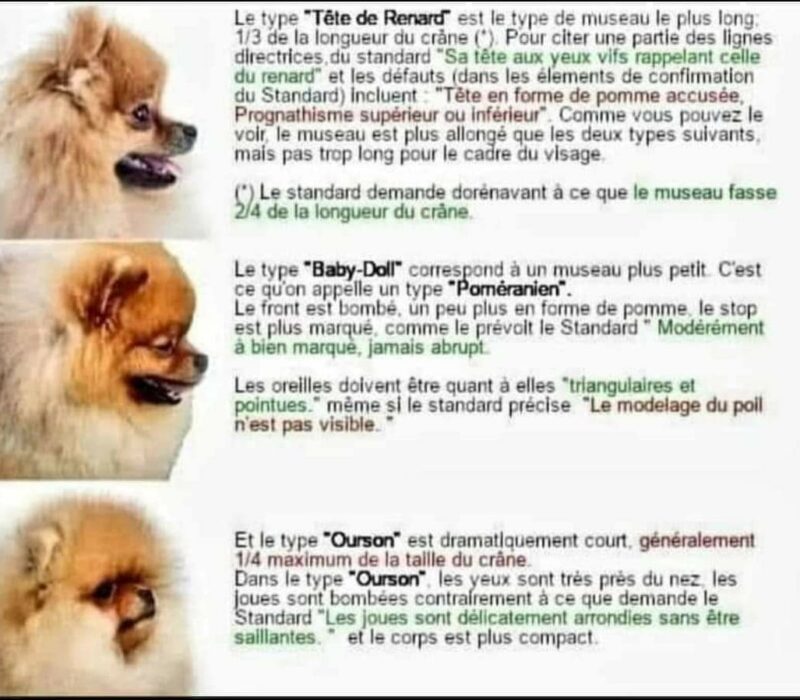
Several types are generally distinguished:
• The Spitz type
This type corresponds more closely to the breed’s more primitive and ancient appearance. The fur is dense and fluffy, with an abundant undercoat. The neck is adorned with a full ruff forming a mane. The bushy tail is carried curled over the back. The head is more refined, with a slightly longer muzzle.
• The Pomeranian type (also called “teddy” or more compact)
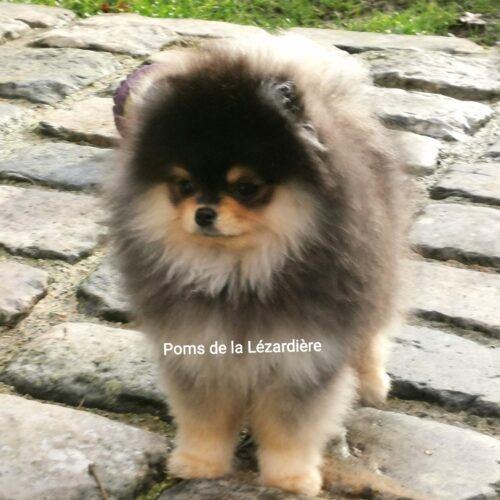
This type retains a very voluminous coat but has a more rounded appearance: a shorter muzzle, smaller and rounder ears, a compact bone structure, and legs that appear thicker. The expression is often softer and more “doll-like.”
• • The American Pomeranian type
It is generally characterized by a slightly wider muzzle and a more domed forehead, giving an even rounder head.
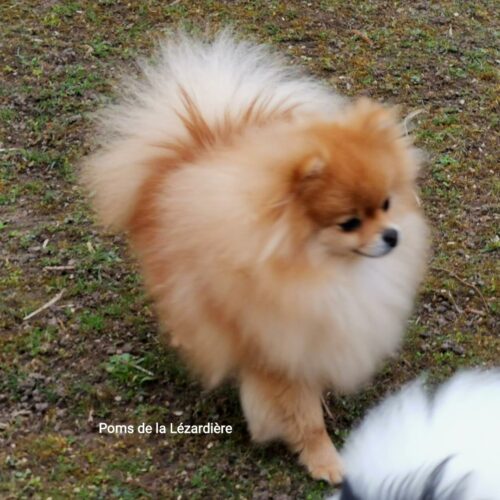
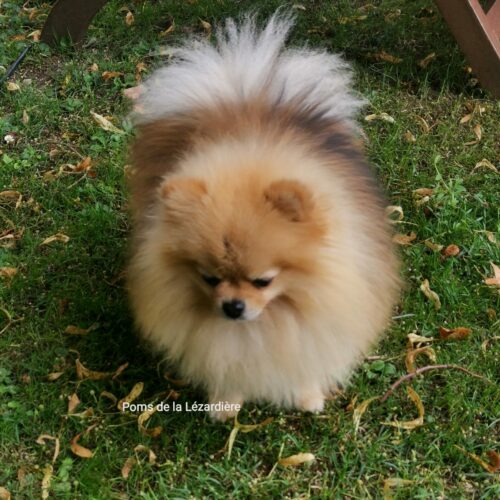
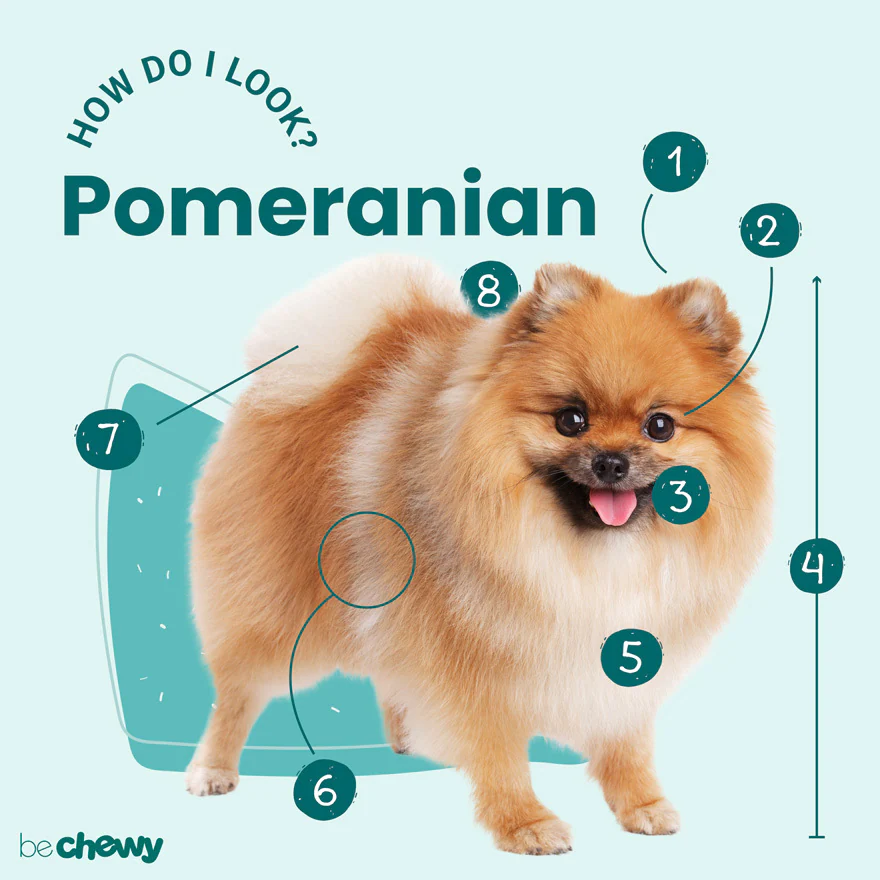
Happy-go-lucky is a Pomeranian’s middle name, because his personality is both friendly and curious. They live for social interactions and to make their pet parents laugh out loud.
If you have kids at your house, you’ll be glad to learn that aggressiveness isn’t typically in this dog’s nature. Pomeranians aren’t known for biting, although any dog will snap if provoked. So keep a watchful eye out for toddlers and pre-schoolers who may accidentally drop or squeeze this fluffy ball of fur too tightly – it’s easy to mistake a little Pomeranian for a favourite stuffed animal. Still, this breed is known to be rather compatible with their extended family, whether it includes other dogs, cats or children.
Not only do they have the looks, but also the smarts. Poms have competency in spades and they’re adept at picking up fun new tricks. If you’re hoping to try obedience classes with your Pomeranian, this breed is very intelligent and likely to get good marks!
Unsurprisingly, the Pomeranian excels in jobs such as therapy dog work and is also known to make an excellent watchdog as it is not afraid to bark. And if looking absolutely adorable is considered a type of employment, then a Pom fills this requirement too—and you should hire this fur baby, pronto!
Pomeranians are sometimes described as arrogant, which probably refers to their proud walk and bouncy personality. Smart, perky and alert to everything around them, the Pomeranian breed’s generally positive temperament makes them worthy of top-dog status in many types of families.
reference : be.chewy.com/dog-breed/pomeranian/
reference : be.chewy.com/dog-breed/pomeranian/
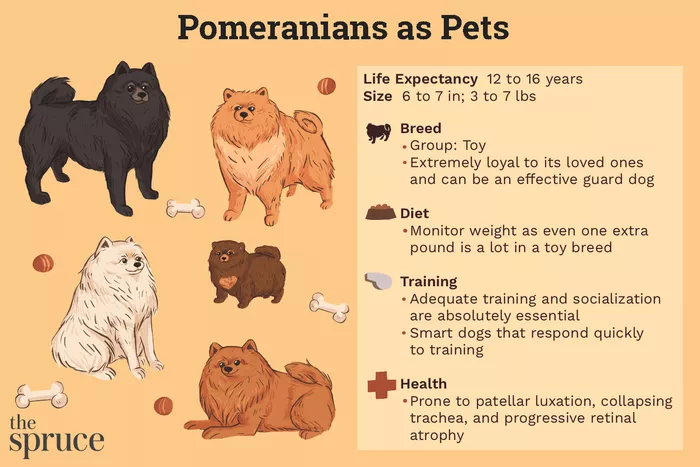
reference : The Spruce / Emilie Dunphy
Esprit Dog
Discover the German Spitz dog
the important points of this breed of dog such as: – behaviour – education and training – health – not forgetting the received ideas
Links to learn more
FCI Fédération Cynologique Internationale: German Spitz Nomenclature
CKC Club Kennel Canadien : Pomeranian standards
AKC American Kennel Club : Traits & characteristics
AKC American Kennel Club : Official standard of Pomeranian
The Kennel Club (England) : Breed Standard
More information
The morphology of the spitz; skeleton, musculature, dentition

