Chewing is an integral part of puppy development. Whether it’s for playing, exploring, teething, or learning house rules, this behavior is natural and temporary..
With patience, consistency and appropriate reactions, your puppy will gradually learn to control its jaw and to differentiate between what it can chew… and what it must leave alone.
Education is a daily learning process: calmness, consistency and kindness are your best allies.
Understanding why he nibbles
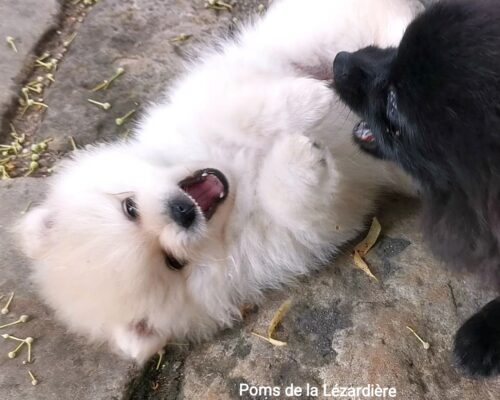
Nipping is a natural behavior and essential to a puppy’s well-being. From the age of three weeks, it plays and interacts in this way with its mother and other puppies in the litter.
They jump on each other, push and nip at each other to have fun and get to know each other.
This behavior is not a sign of aggression, but is part of its development and learning.
Learning through taste
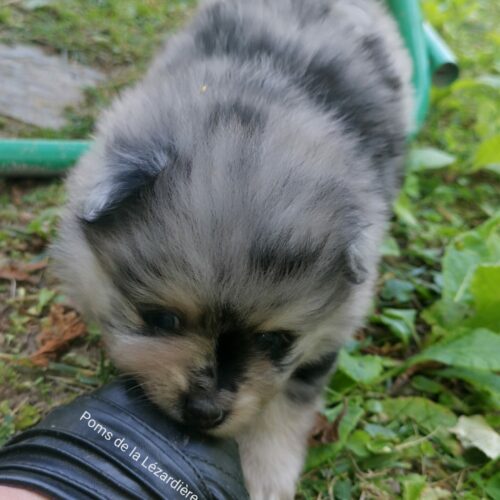
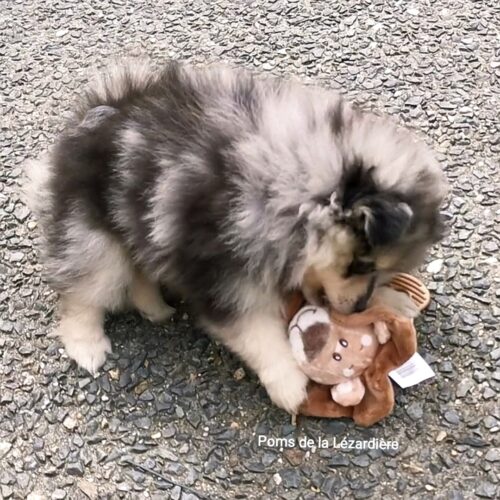
For a puppy, chewing on the objects around it seems like a game. In reality, it nibbles on them to discover its environment and test its new abilities.
This behavior contributes to what is known as bite inhibition: by nipping, the puppy gradually learns to control the pressure of its jaw. This step is essential in its learning.
Through its mouth, it explores different textures, discovers smells and sometimes even unknown tastes. In this way, it builds its personality, a bit like a young child who touches and manipulates everything it finds.
At this age, the jaw is its main tool for exploration: nibbling is learning about the world around it.
Biting and teething
Chewing also helps the puppy relieve discomfort associated with teething.
Like children, puppies first have milk teeth, called deciduous teeth (28 in total), before getting their permanent teeth. These first teeth appear around three weeks of age and are usually all present by six weeks.
They will gradually be replaced by permanent teeth:
-
4 months: incisors
-
5 months: fangs
-
6 months: molars
By the age of 7 months, a puppy normally has all of its permanent teeth, which is 42 teeth..
During this period, her gums may be sensitive or painful. Chewing on them allows her to relieve this naturally.
Although a puppy bite is rarely serious, it is important to gradually teach the puppy to control and then abandon this habit.
Sometimes, baby teeth may not fall out on their own. In this case, a consultation with a veterinarian is necessary to check the situation and, if needed, have them extracted.
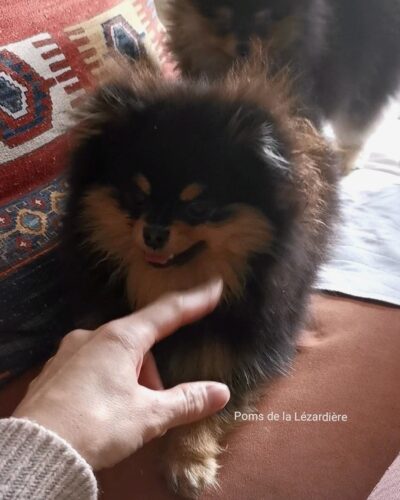
Teach him that a hand is a caress, not a toy
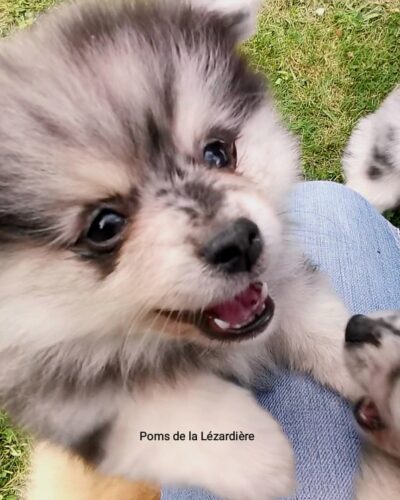
To a puppy, your hand may seem like a toy. He doesn’t yet distinguish between playing and receiving a petting: this is something he needs to learn.
When you touch him and he tries to nip you, calmly remove your hand while making a soft squeaking sound. This signal mimics the reaction of a puppy in pain and helps him understand that his action is too abrupt.
Wait a few seconds, then try again.
-
If he doesn’t bite, praise him immediately with your soft and encouraging voice.
-
If he does it again, remove your hand again, without shouting or getting angry.
The key is consistency: the puppy learns by repetition.
This exercise requires patience and calm, but with consistency and appropriate reactions, your puppy will gradually understand that the hand is for petting, not for nipping.
You’re on the right track!
Teach him that it is forbidden to chew on certain objects
The puppy needs to discover that it has a jaw… but also understand that using it has consequences for its environment. This learning is part of its education.
When you catch him chewing on a forbidden object, call him by his name and say a firm, calm, and measured “no,” without shouting. Your tone should be determined, but never aggressive.
In general, your puppy will immediately perceive that its behavior is not acceptable to you and will drop the object.
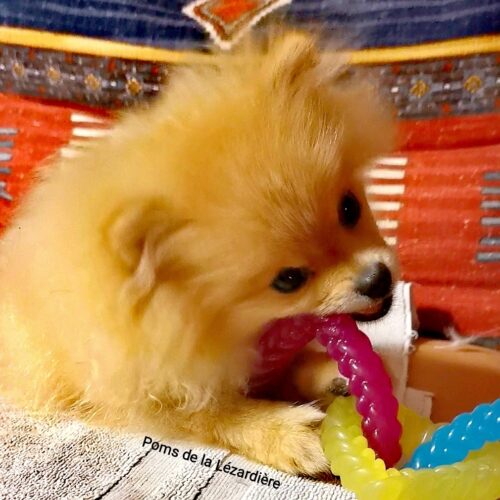
As soon as he does it, tell him “that’s good” and immediately offer him an object that he is allowed to chew on (chew toy, deer antler, pressed skin bone, etc.).
⚠️ Avoid giving a food treat as a reward: he might associate naughtiness with getting a reward.
The key to success is consistency:
-
Intervene only if you catch him in the act;
-
Always repeat the same instruction;
-
Reward him as soon as he adopts the right behavior.
A simple principle to remember: “What they don’t see, they don’t get caught for.”
It’s pointless to scold a puppy afterward. They won’t connect your reaction with their misdeed.
By consistently redirecting his attention to his own toys, you help him understand what he is allowed to chew. Over time, he will naturally gravitate towards the permitted objects.
Patience, consistency and kindness are the foundations of successful learning.
My dog bites me… How can it be prevented?
Video explanation by Dr Charlotte RENARD,
veterinary consultant for Direct-Vet.fr
More information
Some mistakes to avoid in order to have a well-behaved and obedient dog.

