
The development of the puppy in its first weeks of life.
From preparing for birth to early learning, each step is carefully considered with attention, patience and kindness.
Nothing is left to chance.
Constant presence with the mother, close monitoring during the first few days, gradual socialization, daily discoveries, care, gentle handling, and house training… everything contributes to building balanced, confident, and well-adjusted puppies.
My role isn’t limited to simply bringing puppies into the world.
I support them during their first weeks of life, the weeks that shape their future temperament and adaptability.
I promise to offer them a peaceful departure, at the heart of family life, in a safe, stimulating and loving environment.
Parce qu’un chiot bien entouré au début de sa vie devient un chien stable, confiant et profondément attaché à sa future famille.
Education requires the utmost care because it affects the whole of life.
Quote from Seneca; Thoughts and Morals – 1st century AD
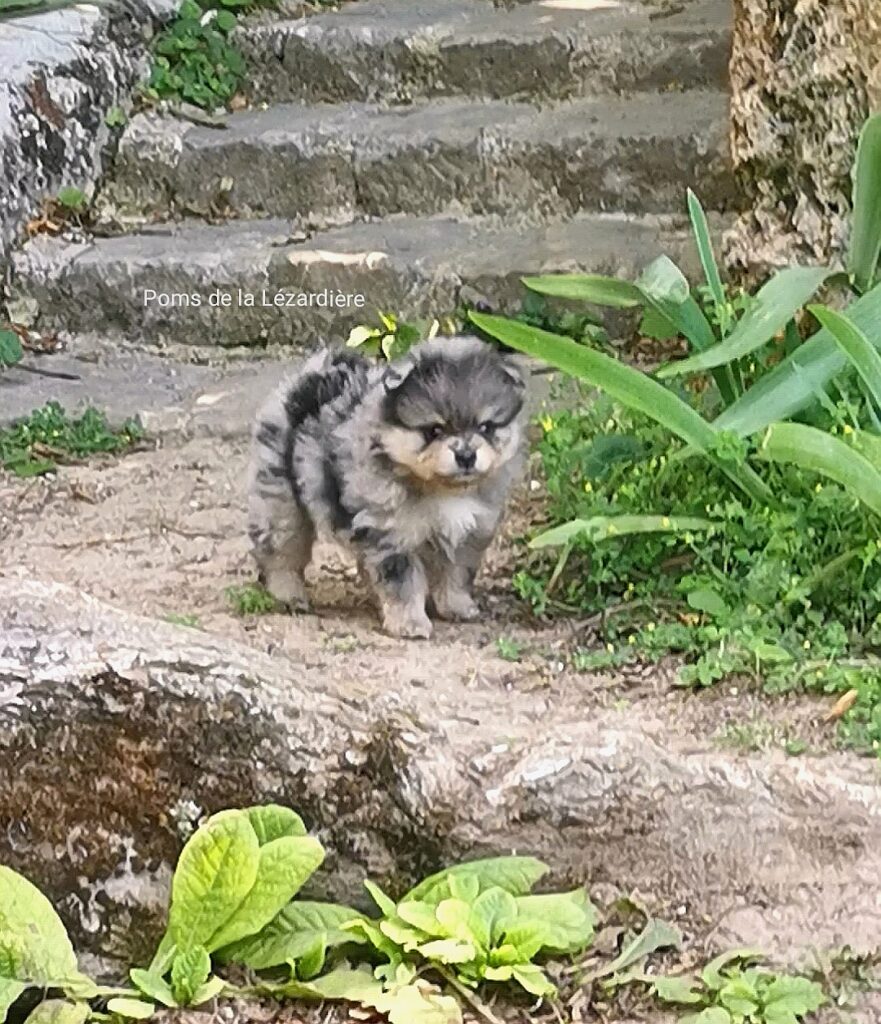
Puppy Awakening Video
Video The first outing!
1 – My bitch’s well-being
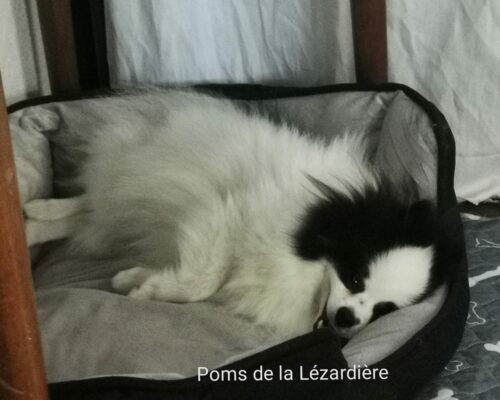
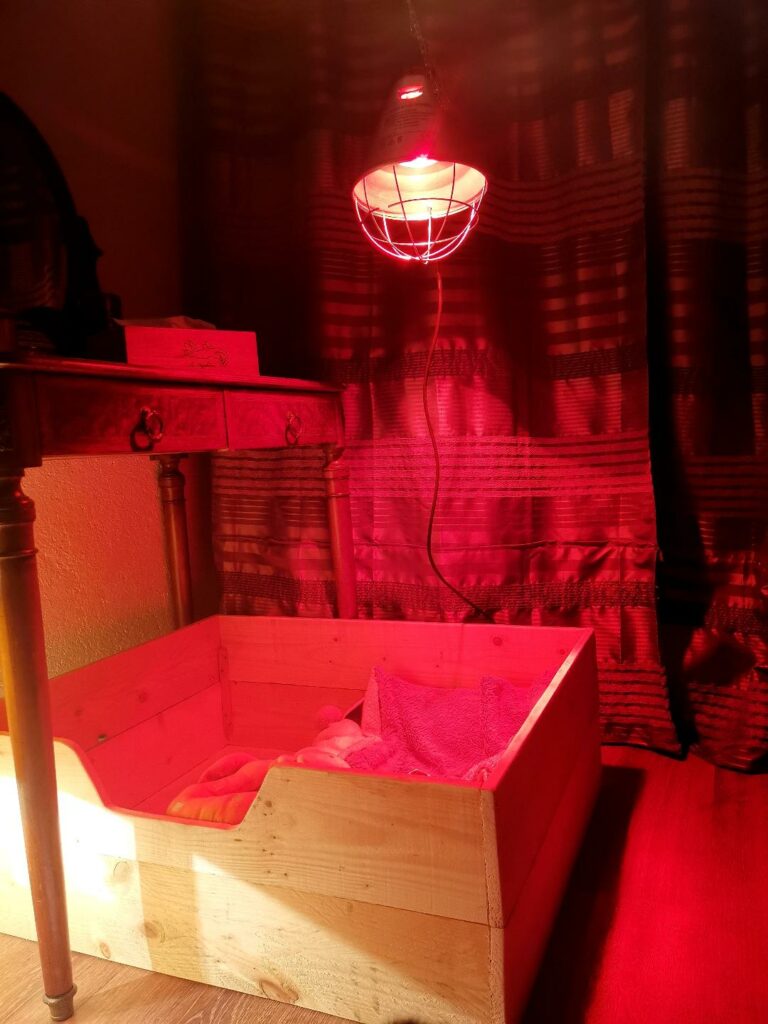
About two weeks before giving birth, I put my dog in the nursery (I sleep in the same room), with her basket, her cuddly toy and clean and comfortable puppy pads.
The expectant mother needs calm, security, and rest. It is essential that she feels my presence and knows she is not alone during this important time.
This proximity also allows me to monitor her closely and react quickly to the first signs announcing the start of labor.
Everything is designed so that she experiences this moment in serenity, surrounded by attention and kindness.
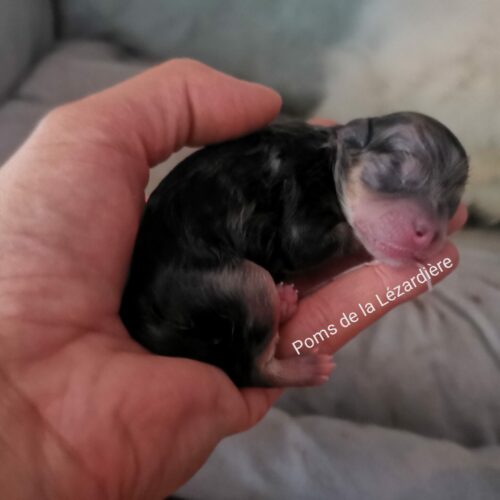
2 – My bitch’s whelping
During the birthing process, I stay with my dog to reassure her. I speak to her softly, pet her, and make sure to maintain a calm atmosphere to soothe her.
I carefully monitor each birth and intervene if necessary, especially when a puppy has difficulty getting out.
If necessary, I gently open the pockets, rub the puppies to stimulate their breathing and accompany them in their first breaths of life when they have difficulty breathing spontaneously.
I then place them near their mother, nice and warm, so that they can enjoy her presence and warmth.
I also make sure each puppy quickly finds a teat. If they have trouble finding it, I gently guide them. It’s crucial that they ingest colostrum in the first few hours of life: this first milk, rich in antibodies, provides them with essential immune protection. It is only produced during the first two days.
Every action is performed with gentleness, vigilance and respect, so that the birth takes place in the best possible conditions.
.
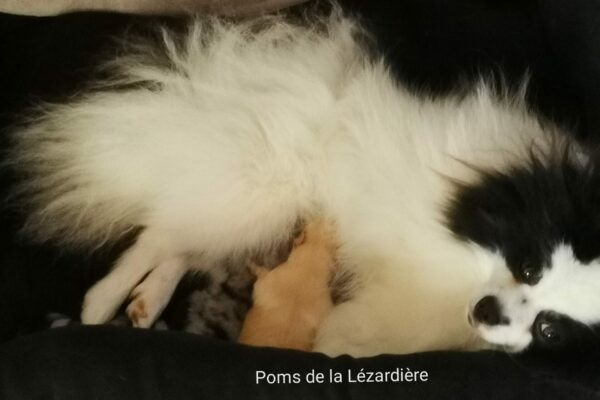
During the first few days of life, I provide very close monitoring of my dog and her puppies.
I weigh the puppies daily to check that they are gaining weight properly. This allows me to ensure that the mother is producing enough milk and that each puppy is nursing correctly.
If there are many puppies or if milk production is insufficient, I provide supplemental bottle feeding to relieve the mother and ensure harmonious growth for each one.
I also make sure to bring back to their mother any puppies that may have wandered off and to ensure that all find their place to nurse, without any being left out.
Chaque détail compte durant ces premiers jours essentiels, afin d’assurer un départ de vie serein et équilibré.
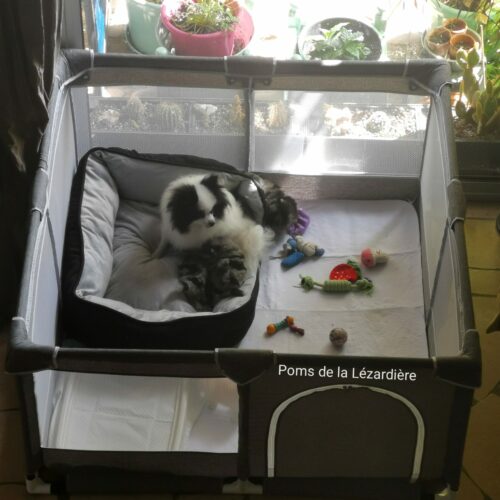
3 – The playpen
4 – The care, the cuddles
The mother passes on to her puppies their first lessons and the essential codes of canine life.
From birth, I remain present to ensure everything goes smoothly and that the puppies gradually become familiar with me. My goal is for them to associate human presence with something reassuring and positive from a very early age, and to develop a relationship of trust similar to the one they have with their mother.
After a few days, I begin the first gentle handling and petting. These moments are short, calm, and always adapted to the puppies’ rhythm.
From four weeks old, I introduce a small, soft baby brush. The goal isn’t to clean them—their mother takes care of that perfectly well—but to gradually get them used to brushing. I transform this routine into a pleasant moment, similar to a massage, so they associate it with a positive experience.
Their claws are checked and trimmed regularly if necessary, in order to gently accustom them to this handling.
The eyes and ears are checked gently and cleaned if necessary using a moist compress.
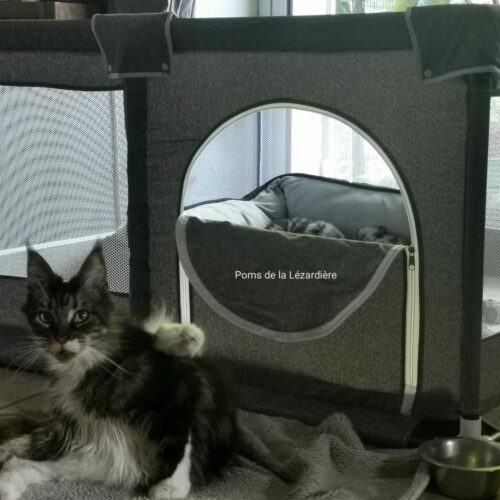
Auntie Iris, our Maine Coon, looks after the pups when Mummy Prune is out!
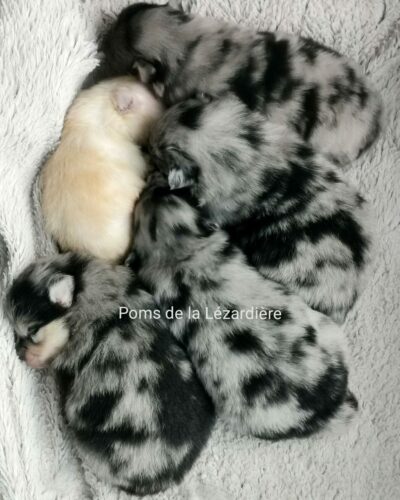
5 – The discoveries
The first explorations outside the park can begin.
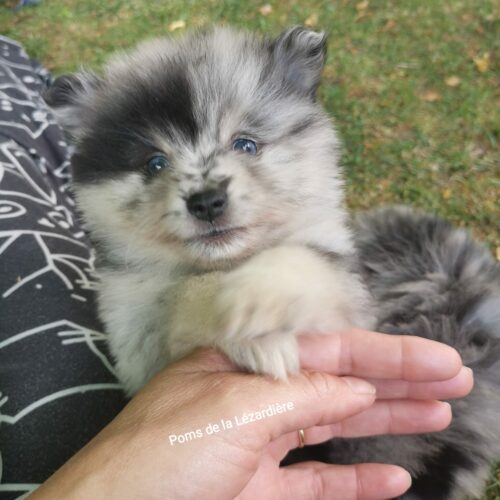
From four weeks old, the puppies gain confidence: they stand well, walk with more stability, and become increasingly curious. The gate to the playpen remains open during the day so they can move around freely under supervision.
They then begin to interact more with the other animals in the house, gradually discovering the different codes of communication.
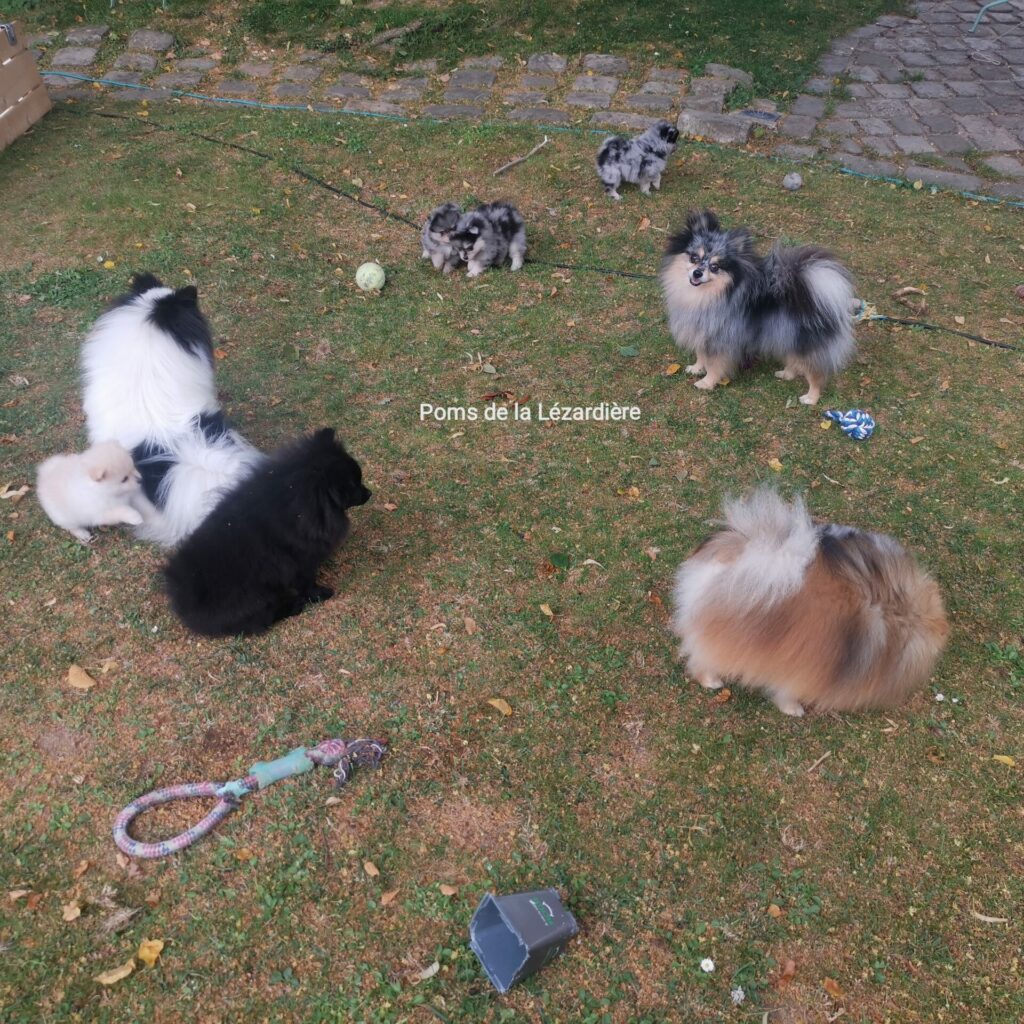
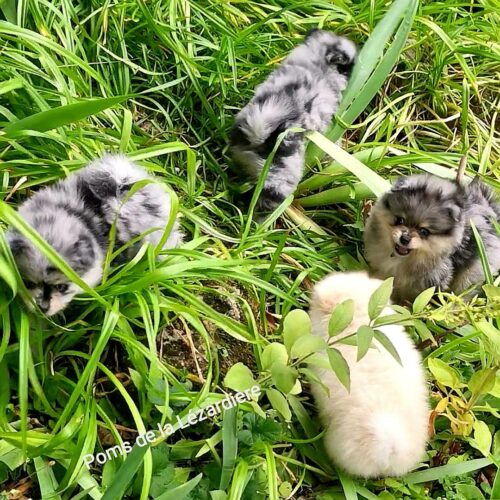
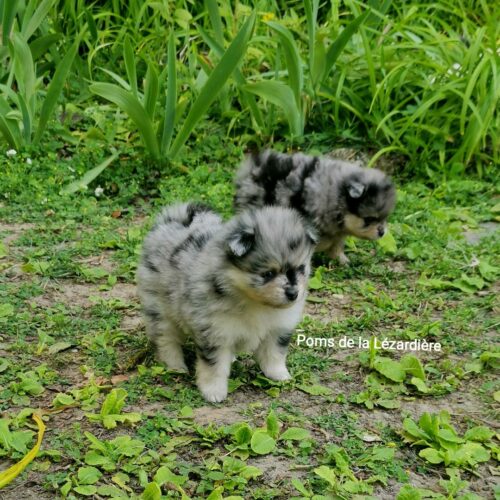
From five weeks old, and when the weather permits, regular outings begin. They set off to discover the garden, a true learning ground.
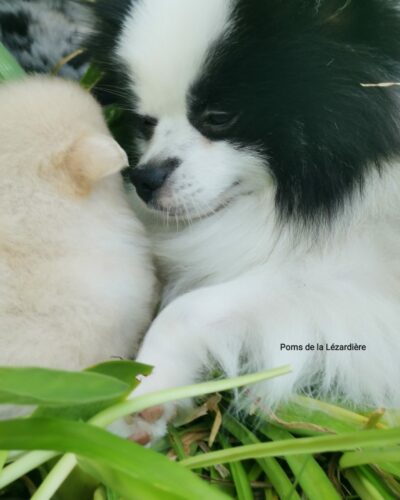
They play, hide, explore, smell new scents, hear various sounds… Each experience stimulates their curiosity and contributes to their sensory and emotional development.
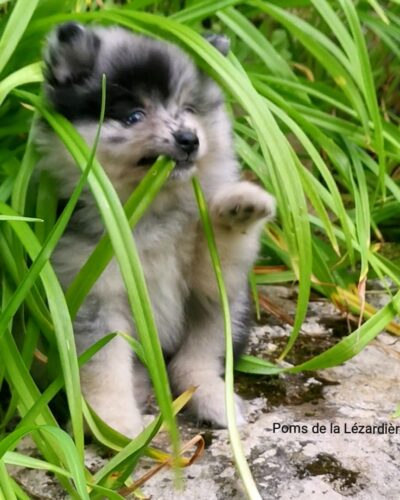
At the same time, their diet gradually evolves. They discover kibble adapted to their age and naturally explore their environment, such as the grass in the garden.
Ces découvertes quotidiennes sont essentielles : elles construisent des chiots confiants, ouverts et bien dans leurs pattes.
6 – The first learnings
The first learning experiences naturally begin with the mother, who transmits the essential basics of canine communication and behavior.
From birth, puppies also learn to trust humans. I handle them every day, briefly and gently, especially for weighings and health checks, so that human contact is always associated with a reassuring experience.
Gradually, they are introduced to brushing and the basics of grooming. These procedures are carried out calmly, so that they become positive habits.
Socialization continues with family members and other household animals, promoting their adaptability and balance.
Around six weeks of age, I begin potty training. I take the puppies outside regularly, day and night, so that they gradually associate the outdoors with their needs.
At around two months / two and a half months, nighttime outings are generally reduced to one or two times per night, and their living space remains clean.
A few videos
Puppies and the tunnel video
Puppies and the cat video
Video MinisPoms outside 1
Video MinisPoms outside 2
More information
The puppy is now big enough and can live his new life with you.

