
Vaccines
Serious and common illnesses
Anti-parasites
 Why is it advisable to vaccinate your pet?
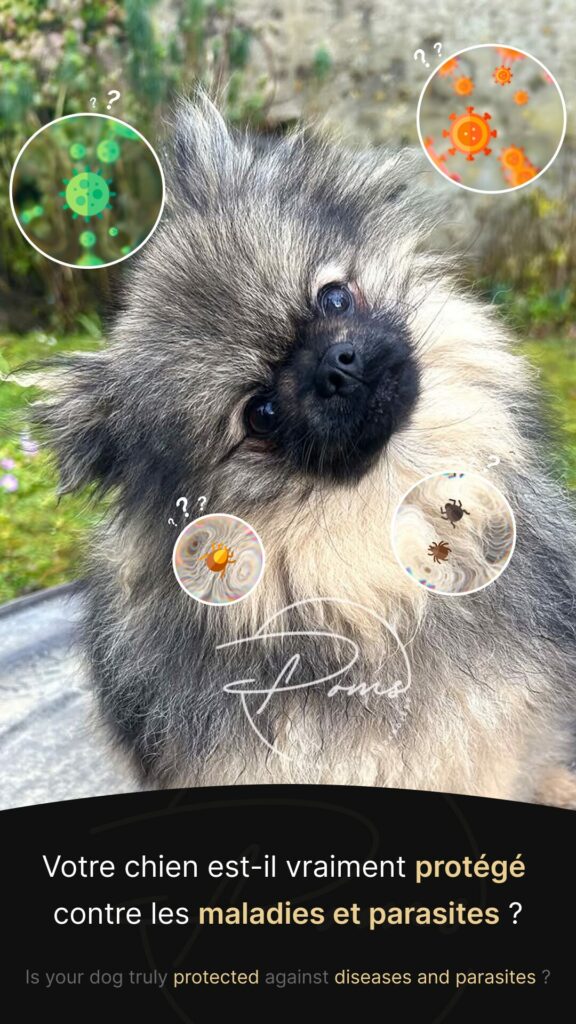
Vaccinate your puppy
Vaccination is intended to protect your dog from common and contagious diseases that could lead to death or irreversible damage to his health.
Next, the seven most common serious diseases: distemper, Rubarth’s hepatitis, parvovirus, rabies, piroplasmosis, leptospirosis and kennel cough.
From the eighth week onwards, the mother’s antibodies no longer act on the puppy and the puppy is therefore no longer protected against disease. Consequently, the first vaccine injection should be administered at eight weeks of age.
Vaccinations must be renewed annually to ensure your dog remains protected throughout its life.
reference : vetostore.com-dog tips
Serious illnesses
Learn more about serious diseases – why vaccinate your dog?
Vaccination is only compulsory in very few cases in dogs in France. But just because it is not compulsory does not mean that it is not strongly recommended for certain diseases, to protect our animals. There are a number of diseases (viral, bacterial and parasitic) for which vaccines are considered essential in dogs in our regions such as: Parvovirus (P), Rubarth’s hepatitis (H), Canine distemper (C), Leptospirosis (L), Rabies (R).
All these diseases are relatively serious and potentially fatal in dogs. They are also quite contagious.
The other vaccines that exist for dogs are considered optional, as the diseases they protect against depend on the dog’s lifestyle. This is the case for the vaccine against kennel cough (Bordetella, Pi), piroplasmosis (Bab), leishmaniasis and Lyme disease (Ly).
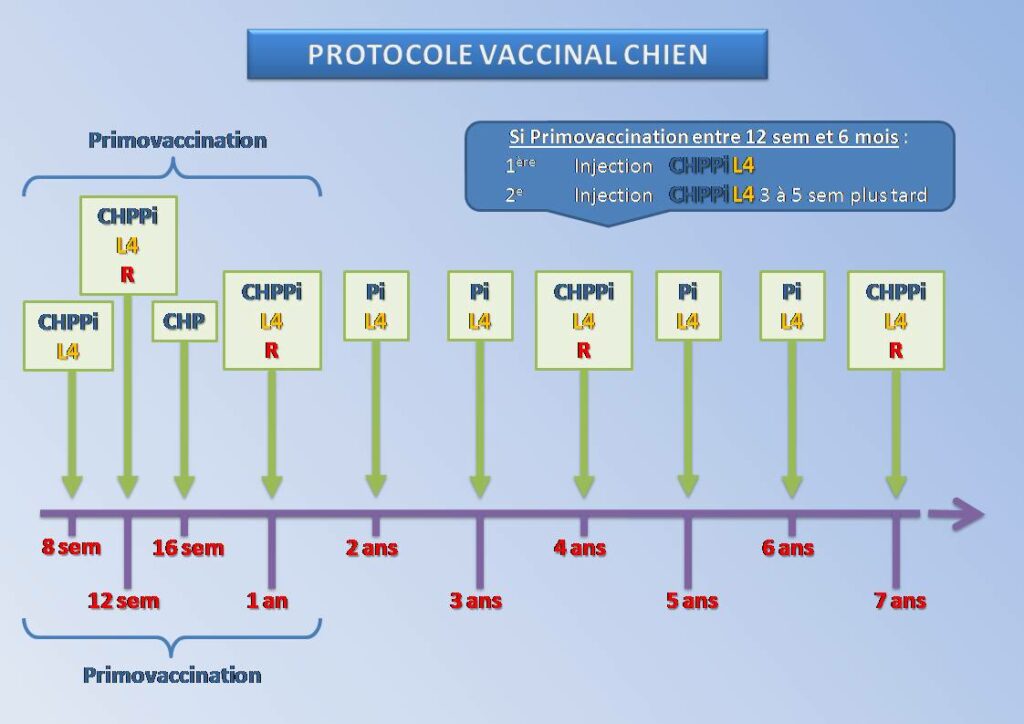
references :
Canine distemper
It is a highly contagious disease caused by a virus that affects several species of carnivores including dogs, wolves, foxes, lynx and ferrets. It preferentially affects young animals.
The dog is infected orally and nasally by contact with secretions contaminated with the virus. The virus attacks the body’s epithelium and thus causes various symptoms.
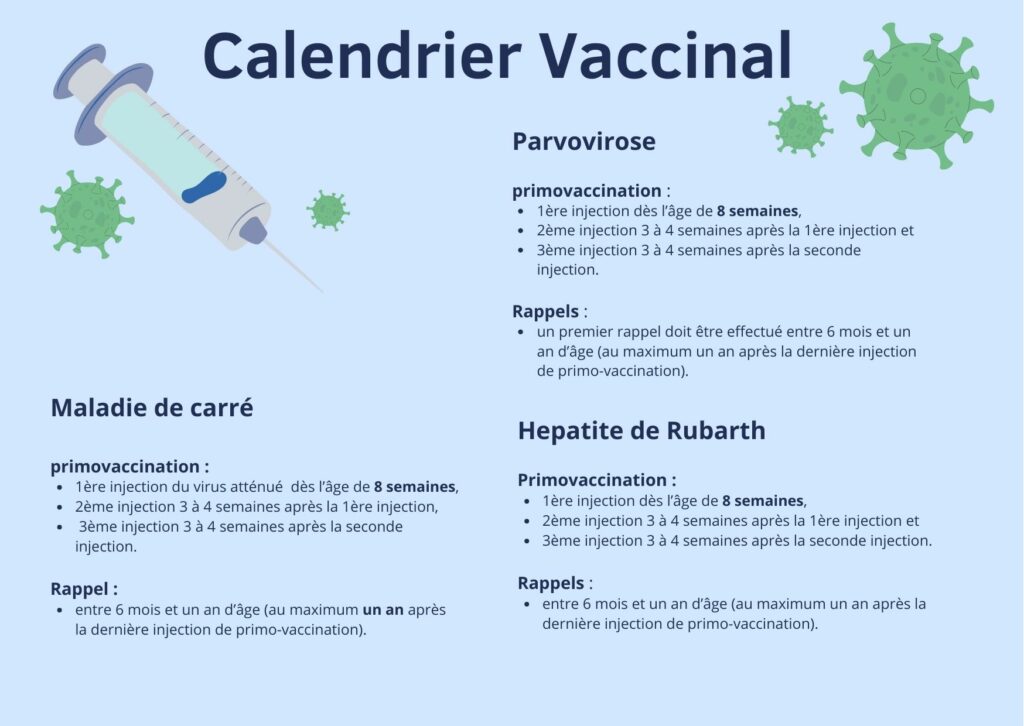
The best way to prevent the disease is through vaccination, which is very effective in dogs and ferrets. The primary vaccination consists of three injections at one month intervals in the puppy, followed by booster shots every three years in the adult dog.
Learn more? symptoms, treatment and prevention
reference : illicotveto.com-Dr Marion Tissier-veterinarian graduated from the National Veterinary School of Lyon.
Rubarth’s hepatitis
Rubarth’s hepatitis is mostly found in unvaccinated puppies under one year of age. This infectious disease is highly contagious. Even if it has become rare today.
This liver disease is caused by an adenovirus (CAV1) which is a small virus that is quite resistant in the external environment. The transmission mainly takes place as a result of :
-Contact with carrier dogs or foxes that act as a reservoir for the disease.
-External parasites (fleas, lice).
-The external environment contaminated by urine.
Vaccination is carried out from the age of 7 weeks (at the same time as for distemper) and consists of two injections one month apart. The recall is done every year or two.
Learn more? symptoms, treatment and prevention
reference : wanimoveto-Dr Bénédicte Hivin-veterinarian graduated from the National Veterinary School of Lyon
Parovidosis
The animals affected are mainly puppies and non-vaccinated adult dogs. It also affects more specifically dogs living, or having passed through, a community (puppy training courses, kennels, shelters, exhibitions, pet shops, etc.).
It is caused by canine parvovirus type 2, also known as CPV-2. This virus is very similar to the parvovirus that causes typhus in cats. It causes haemorrhagic gastroenteritis which can lead to the death of the animal in a few hours, in the case of the lightning forms, in a few days in the absence of appropriate emergency medical care. CPV-2 is a small virus, extremely resistant in the environment (several months) and resistant to many disinfectants, making it highly contagious.
Parvovirosis is the most common cause of puppy mortality in breeding, mainly during the weaning period.
The only real way to prevent parvovirosis is through vaccination! Vaccination against canine parvovirosis is one of the so-called essential vaccines for dogs of all ages and lifestyles. Since this vaccination was introduced in our country, the number of animals infected by this virus has decreased significantly.
Puppies born to properly vaccinated dams will gain immunity to parvovirus in their first week of life due to maternal antibodies transmitted through colostrum (the first milk). This immunity will gradually disappear between 6 and 16 weeks. Hence the importance of vaccinating your puppy as soon as possible, usually around 8 weeks of age.
The vaccination protocol against parvovirosis consists of three injections given to puppies at an interval of one month, followed by a booster when the animal is about one year old. Then the booster vaccination can only be done every 3 years.
Learn more? symptoms, treatment and prevention
reference : illicotveto.com-Dr Clément Leroy-Veterinarian graduated from the National Veterinary School of Toulouse.
Rabies
Rabies is a well-knownfatal disease. However, many owners wonder why vaccination against this disease is still recommended when it is no longer present in France today.
Rabies is an infectious disease caused by a virus that can affect all mammals including humans! It is a zoonosis, a disease that can be transmitted from animals to humans. Once the disease occurs, it leads to encephalitis (inflammation in the brain) which is always fatal. The virus is present in the saliva of infected mammals, such as cats and dogs. The virus is excreted in the saliva up to 15 days before the onset of symptoms. The disease is transmitted by biting, scratching or licking a wound or mucous membrane.
It is not compulsory to vaccinate your dog against rabies in France, except for dogs in so-called dangerous categories (law of January 1999).
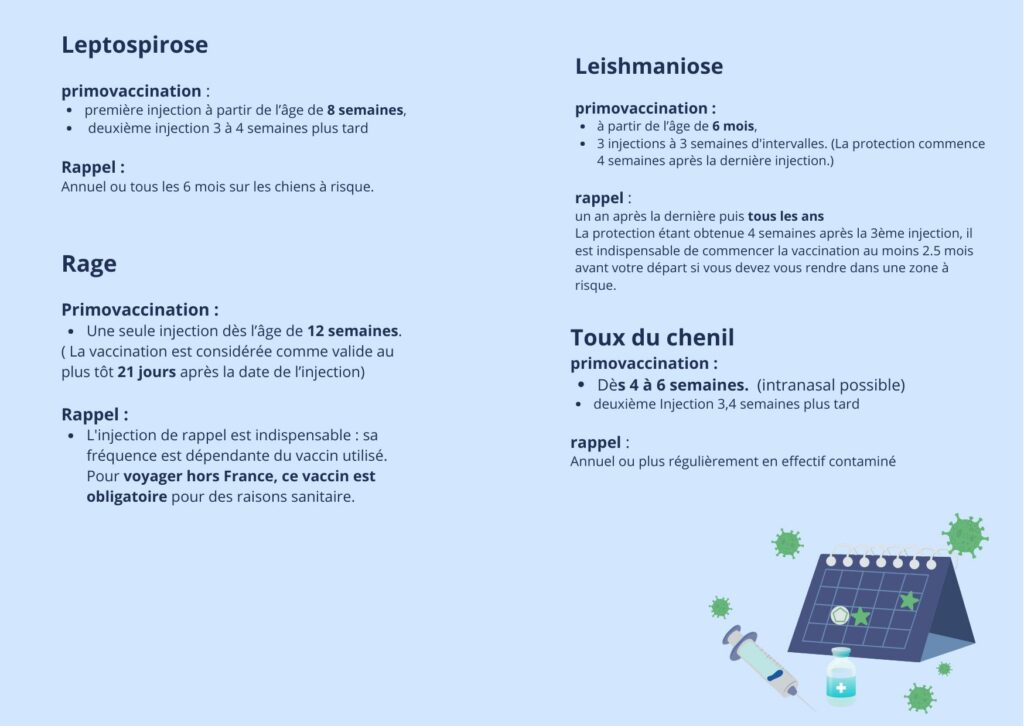
Rabies vaccination is compulsory if you wish to travel outside France with your dog (cat or ferret).
Learn more? symptoms, treatment and prevention
reference : illicotveto.com-Dr Tatiana Pradel-veterinarian graduated from the National Veterinary School of Lyon (Vetagro Sup)
Piroplasmosis
Piroplasmosis, also known as canine babesiosis, is an infectious parasitic blood disease transmitted by ticks to dogs only.
It is caused by a protozoan parasite called Babesia canis. It is transmitted by the ticks Dermacentor reticulatus and Rhipicephalus sanguineus, which can be found in large forests as well as in cities (parks, gardens). The disease is more prevalent in certain parts of France, such as the south-west, the Massif Central and the eastern departments: this is where the most ticks carrying the parasite are found. The disease also has a seasonal character: sick animals tend to be presented in spring and autumn.
Piroplasmosis is a potentially very serious disease. It can lead to the death of the animal or cause kidney damage for example.
There is a vaccine against piroplasmosis in France: it is called Pirodog©. It can only be used from the age of 5 months. The primary vaccination protocol consists of two subcutaneous injections 3-4 weeks apart. Boosters should then be given every year or every 6 months depending on the lifestyle and risk to which the dog is exposed.
Learn more?
reference : illicotveto.com-Dr Tatiana Pradel-veterinarian graduated from the National Veterinary School of Lyon (Vetagro Sup)
Leptospirosis
Leptospirosis is an infectious bacterial disease caused by spirochetes of the genus Leptospira. It is also a zoonosis, a disease that can be transmitted from animals to humans. It is a disease that is found all over the world.
The bacteria of the genus Leptospira are divided into several serogroups that are genetically different. In France, the main serogroups identified are Leptospira Canicola, L. Icterohaemorrhagiae, L. Australis and L. Grippotyphosa. These bacteria are mainly found in water contaminated with wildlife (rodents, hedgehogs, etc.) but also in contaminated urine (dog urine). Dogs living in towns are just as much at risk as dogs living in the countryside.
In the most common form, the bacteria attack the kidneys, resulting in acute renal failure associated with fever, malaise, digestive problems and loss of appetite. Leptospirosis can also affect the liver and lungs.
Primary vaccination against leptospirosis in puppies consists of three injections at 2, 3 and 4 months of age. Only 2 injections are given if the leptospirosis vaccination is started at the age of 3 months (same for an adult dog that is no longer up to date with its vaccines). The first booster is given when the animal is one year old, then annually thereafter.
Learn more?
reference : illicotveto.com-Dr Tatiana Pradel-veterinarian graduated from the National Veterinary School of Lyon (Vetagro Sup)
Kennel coughs
Kennel cough, also knownas canine infectious tracheobronchitis, is a highly contagious disease, mainly encountered in autumn and winter, which affects the respiratory system. It is mostly found in communities and places where dogs congregate
It is good to know that when you vaccinate your dog against the basic diseases, namely CHPPi (distemper, Rubarth’s hepatitis, Parvovirosis and Parainfluenza virus), you are already partially protecting against some of the pathogens that cause kennel cough.
-Parainfluenza virus is already included in standard vaccine mixtures, with annual boosters.
-When vaccinating against Rubarth’s Hepatitis, one is vaccinating against Canine Adenovirus Type I. There is cross-immunity with Canine Adenovirus Type II, which is frequently involved in kennel cough in dogs. That is, when vaccinated against Rubarth’s Hepatitis, the antibodies developed by the dog will also be effective against the other variant of the virus responsible for the respiratory disease.
For vaccines given by subcutaneous injection: dogs must be at least 4 weeks old; the primary vaccination consists of 2 injections spaced 2 to 3 weeks apart; protection lasts 1 year, so it is necessary to give a booster every year.
Learn more? symptoms, treatment and prevention
reference : illicotveto.com-Dr Tatiana Pradel-veterinarian graduated from the National Veterinary School of Lyon (Vetagro Sup)
II – Common illnesses in Spitz dogs
Common spitz diseases
reference : illicotveto.com-Dr Sarah André-veterinarian graduated from the National Veterinary School of Nantes.
Hyperuricosuria
Hyperuricosuria is an inherited genetic disorder that results in the formation of ammonium urate stones in the urinary system.
reference : illicotveto.com-Dr Laurie Bonnet-veterinarian graduated from the National Veterinary School of Nantes.
Persistent ductus arteriosus
Persistent ductus arteriosus is the most common congenital heart disease in the dog.
The ductus arteriosus is a small blood vessel that prevents blood from flowing into the immature, non-functioning lungs of the fetus. This vessel closes spontaneously a few days after birth, causing blood flow to be redirected to the lungs to take up oxygen.
In some puppies, this ductus arteriosus does not close properly. This disrupts the normal functioning of the heart and leads to heart failure which sets in after a few months.
Females are at greater risk than males, and a genetic component has been identified in certain predisposed breeds.
Often, the only symptom is the presence of a significant, fairly characteristic heart murmur, sometimes associated with heart rhythm abnormalities. The puppy may also show stunted growth and abnormal fatigue, or more rarely cough and breathing difficulties.
The diagnosis is made by performing a cardiac ultrasound with Doppler to visualise the presence of the ductus arteriosus, but also to assess the consequences on the heart muscle and function.
The treatment of choice is surgical and consists of artificial ligation of this ductus arteriosus. This usually results in a permanent cure if the intervention is considered early enough, before the onset of irreversible heart failure. If this operation is contraindicated (risk of surgery, heart failure too advanced), a medical treatment can be prescribed to relieve the animal as much as possible. Unfortunately, without surgery, the prognosis is poor. Indeed, only 40% of puppies survive beyond 18 months.
If you have just acquired a puppy, it is therefore imperative to present it to your veterinarian for a clinical examination and to detect a possible heart murmur, for example during a vaccination consultation. The prognosis and chances of recovery depend directly on how early the diagnosis is made.
There is currently no genetic test to determine if your pet has the mutation that causes this disease.
reference : illicotveto.com-Dr Laurie Bonnet-veterinarian graduated from the National Veterinary School of Nantes.
Fallot’s tetralogy
Tetralogy of Fallot is an uncommon congenital heart disease in dogsand rarely seen in cats. This malformation results from abnormal embryonic development and combines :
- A narrowing in the diameter of the pulmonary artery (pulmonary stenosis),
- A hole in the septum that separates the two ventricles of the heart (ventricular septal defect),
- An anomaly in the position of the aorta,
- An increase in the size of the right ventricle by thickening of the heart muscle (hypertrophy).
The combination of these four abnormalities results in a poor supply of oxygen to the tissues (hypoxia). In order to compensate for this lack of oxygen, the body produces excessive red blood cells, which results in thickening of the blood and makes it more difficult to circulate through the blood vessels. This is known as blood hyperviscosity.
In puppies, the disease is usually expressed around 6 months of age. The lack of oxygenation causes a bluish coloration of the mucous membranes, called cyanosis, which is the most common symptom. The young animal may also show major fatigue on exertion, breathing difficulties or delayed growth.
During auscultation, the veterinarian often detects a heart murmur. This may be of varying intensity depending on the severity of the disease, or even non-existent.
Chest X-rays may show an increase in the volume of the right heart. It is the cardiac ultrasound that allows a diagnosis of certainty by direct observation of the anomalies mentioned above. A blood test may be taken to assess the amount of red blood cells.
The treatment of choice for Tetralogy of Fallot is surgical. It allows the correction of the 4 characteristic anomalies of the disease. However, this type of operation is not widely available in veterinary medicine, due to the technical nature, cost and equipment required.
In these cases, medical treatment may be offered, based on regular bloodletting to reduce blood viscosity. The prognosis is quite variable depending on the severity of the malformations and associated complications. Unfortunately, the lifespan of animals with tetralogy of Fallot is short, with a median survival of 2 years, the risk of sudden death being quite high.
There is currently no genetic test for this disease.
reference : illicotveto.com-Dr Laurie Bonnet-veterinarian graduated from the National Veterinary School of Nantes.
Alopecia
reference : illicotveto.com-Dr Clément Leroy-veterinarian graduated from the National Veterinary School of Toulouse.
Reverse sneezing
Eternuement inverse, which is translated as “reverse sneezing”, is a common phenomenon in dogs that can affect all breeds. It may seem impressive that your dog is making strange noises, but don’t panic!
It is caused by irritation of the nose and pharynx. It manifests itself as a seizure in which the dog inhales sharply through the nose and makes snoring-like noises.
During these reverse sneezing attacks, the dog extends its neck and is tense. It keeps its mouth closed and breathes in loudly several times, a bit like a pig making a noise.
It is in fact a mechanical reflex that is provoked by a sensation of irritation in the nose or pharynx in order to evacuate what is bothering it. It sounds like a cough, but instead of expelling into the nasal cavity like a normal sneeze, the dog sucks the secretions into the back of its mouth, hence the term “sneeze”. It can then swallow and thus remove these irritating elements.
Reverse Sneezing is a kind of reverse sneezing attack in dogs. It is safe for your pet. It can also occur when the dog is excited, eating, drinking or sniffing on walks.
When your dog has reverse sneezing episodes, you can try to stop it by blocking his nostrils for a second or two, but not for any longer!
You can also massage the throat to induce swallowing, but this requires some technique.
Usually, the crisis stops by itself. But it can be very useful to reassure your dog afterwards, who is distressed by this phenomenon, and by the noises he may have made.
Les crises de Reverse Sneezing sont occasionnelles et peuvent être causées par un corps étranger (poussière, pollen, etc), des vapeurs de produits toxiques ou encore des pathogènes irritants pour les muqueuses du chien (bactéries, virus).
Reverse sneezing in dogs can also be caused by a deviated septum, a malformation or an allergy. But in these cases, you will observe other symptoms such as panting, depression or fever. This is why, if Reverse Sneezing attacks are too frequent, it is best to consult your vet.
Learn more?
reference : santevet.com-Maryline Pattin
III – Internal and external antiparasitics
Deworming your dog
Deworming your dog is important to protect him from worms.
Internal parasites are a health risk for the dog. They can cause more serious problems, particularly in very young animals (stunted growth, weight loss, vomiting, diarrhoea, bloated stomach, loss of vitality, etc.).
They can also reach other vital organs such as the heart, lungs or eyes.
You should also treat your dog to protect the health of your family. Some worms can be transmitted to humans.
There are three types of dewormer for dogs: drinkable solution, tablets or injection treatment. Your vet will be able to advise you on the right type of dewormer for your dog.
It is advisable to deworm animals from the age of 2 weeks. Then at 4, 6 and 8 weeks, then once a month until 6 months of age. It is then recommended to deworm them four times a year, at each change of season.
reference : santédemonchien.fr
Learn more? : ESCCAP France is an association whose aim is to translate into French, adapt, disseminate and promote European recommendations for the diagnosis and treatment of parasitic and fungal diseases of pets and horses.
Antiparasitic
A dog that scratches very often and frantically may have fleas, lice, bedbugs, body mange or be allergic to dust, mites or pollen. If your dog scratches abnormally, do not hesitate to consult a veterinarian who will give him the appropriate treatment.
All those little bugs that try to bite him through his coat (like ticks, mosquitoes and sandflies) can transmit serious diseases.
Parasite prevention remains essential and should be maintained throughout the year to reduce the risk of infection and serious disease. Removal of planted ticks is essential, even if your pet is already protected by an external antiparasitic.
reference : santédemonchien.fr
Learn more? : ESCCAP France is an association whose aim is to translate into French, adapt, disseminate and promote European recommendations for the diagnosis and treatment of parasitic and fungal diseases of pets and horses.


