The growth of the Pomeranian Spitz
The Pomeranian’s growth occurs in two distinct phases.
1. The rapid growth phase (from birth to approximately 4 months)
During this period, the puppy develops very quickly.
At 4 months of age, it generally reaches its growth peak. It is estimated that its weight is already about two-thirds of its adult weight.
This is a key stage where nutrition, veterinary care, and a balanced diet play a crucial role.
2. The slower growth phase (from 4 to 8–10 months)
After 4 months, growth gradually slows down.
The puppy’s size continues to increase slightly, while its muscle mass develops and its physique becomes more refined.
Depending on the individual, growth may stabilize around 8 months, but some Pomeranians continue to develop until about 10 months.
It’s important to remember that every puppy develops at its own pace. Monitoring weight and proportions helps ensure proper growth.
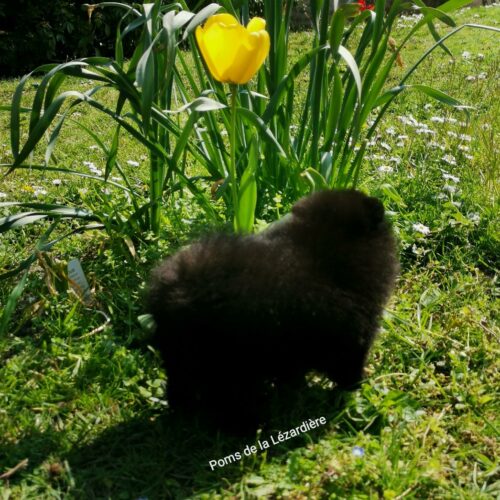

Sia – 3 months old
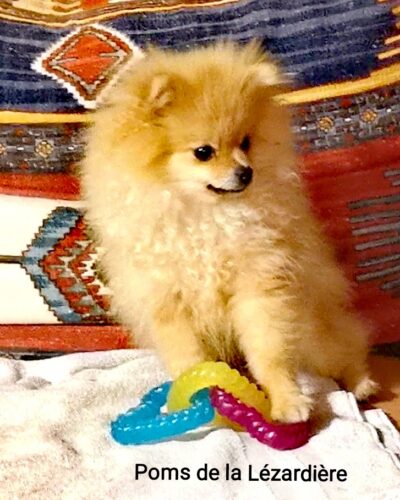
5 months old
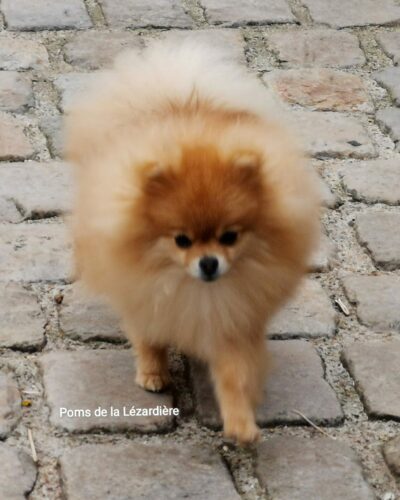
10 months old
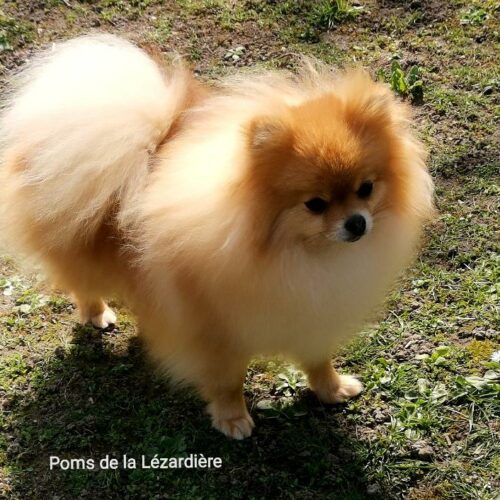
12 months old
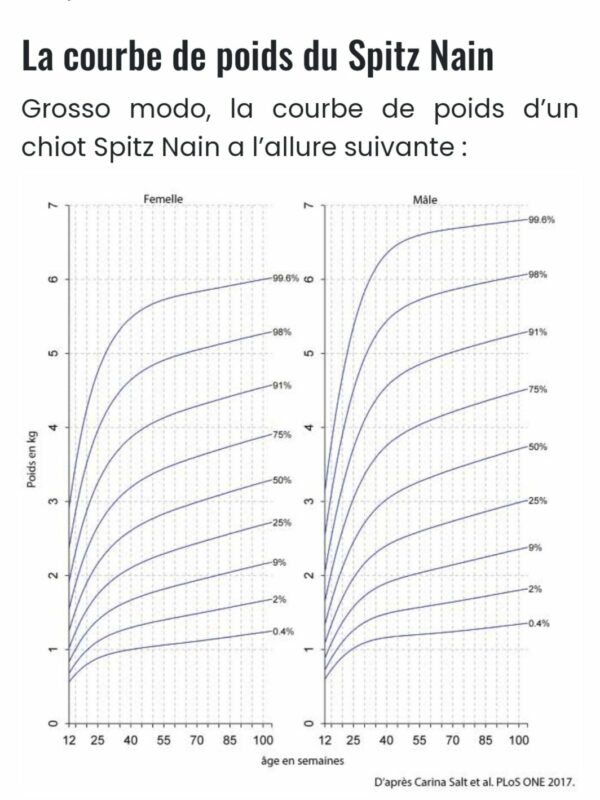
Fast growth
In Pomeranians, growth during the first few weeks is particularly impressive.
The puppy doubles its birth weight in about a week.
It triples it by around three weeks of age.
By one month, it has generally multiplied its birth weight by five.
By two months, its weight has multiplied between 10 and 15 times, depending on the individual.
At four months, the puppy reaches its growth spurt: this is the period of greatest weight gain. At this age, it weighs on average about two-thirds of its adult weight.
However, it is essential to remember that these figures are only indicative. Weight can vary from one puppy to another depending on several factors:
its lifestyle, the quality of its diet, its sleep, its activity level, and the stimulation it receives.
Monitoring the evolution of the first year of Saphir
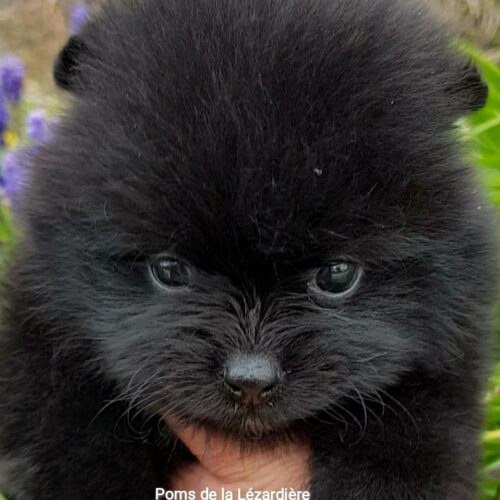
1 month old
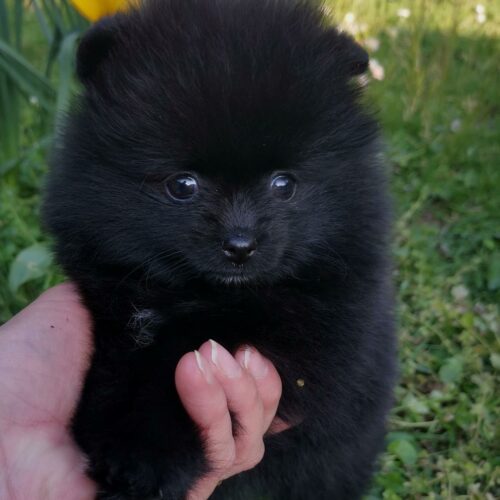
2 months old

3 moths old
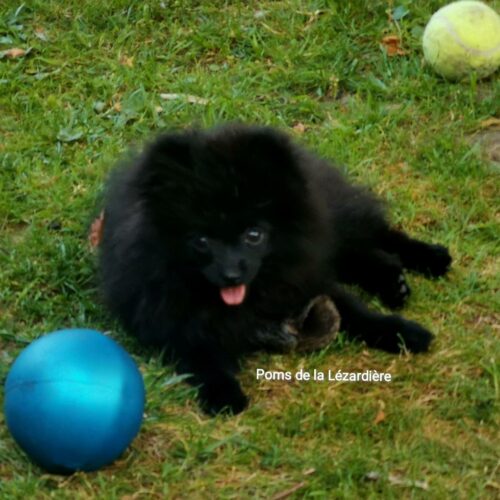
4 months old
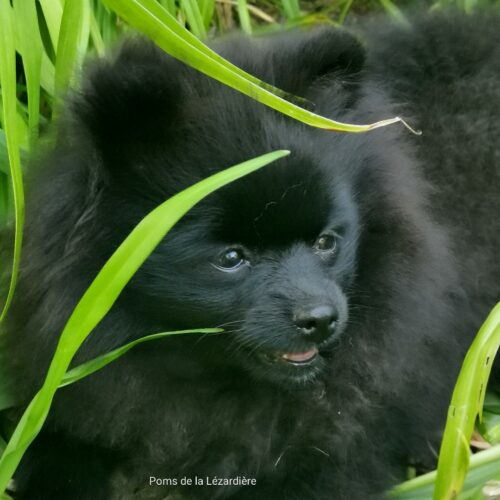
5 months old

6 months old

7 months old
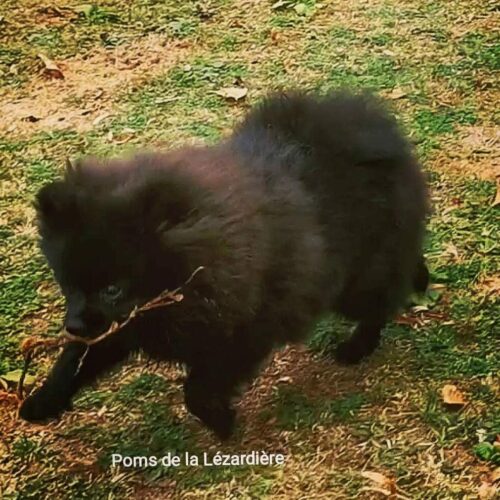
8 months old
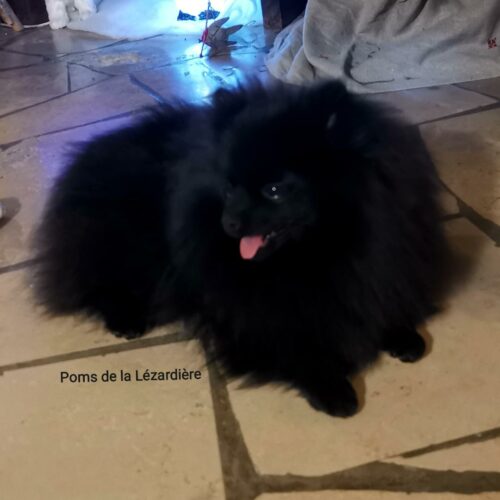
9 months old

10 months old
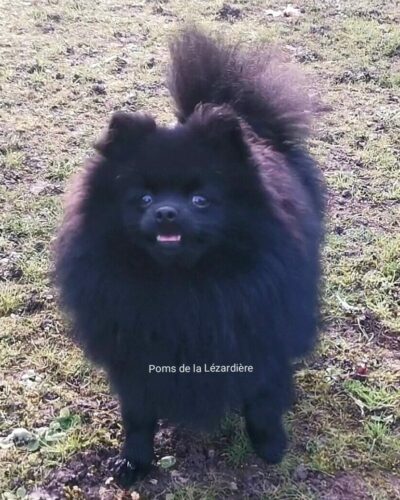
11 months old
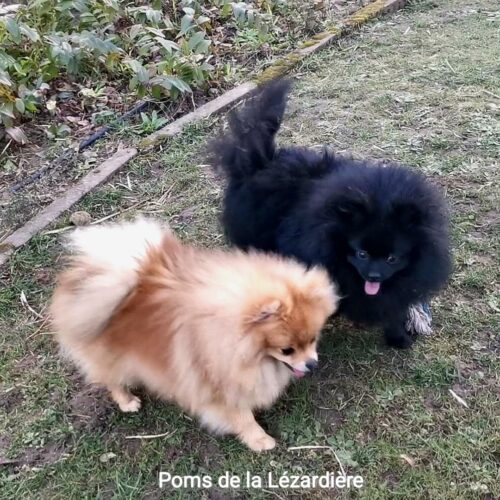
12 months old
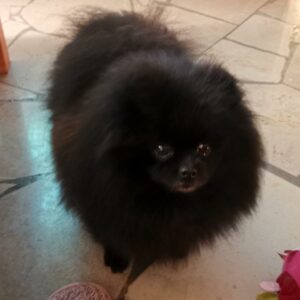
The Pomeranian’s physical growth typically ends between 8 and 10 months. By this age, it has reached its adult size and its weight has stabilized.
However, development is not yet complete. The coat continues to evolve, thickening and becoming denser until around 3 years of age.
The characteristic texture, volume, and ruff of the breed develop over the following months. Therefore, it is normal for a young dog not yet to have the final appearance of an adult.
Behavioral maturation also continues after the end of physical growth.
 )
)
Let’s take the growth of 3 of my pomeranians as an example:
Sia
2 months old
800gr
4 months old
1360 gr
6 months old
1900 gr
10 months old
2500 gr
12 months old
2500 gr
Pom
2 months old
780gr
4 months old
1180 gr
6 months old
1600 gr
10 months old
2050 gr
12 – 24 – 36 months old
2200 gr
Saphir
2 months old
840gr
4 months old
1800 gr
6 months old
2500 gr
10 months old
3300 gr
12 – 14 months old
3500 gr
We’ve observed that, even with a similar weight around two months of age, my Pomeranian puppies can develop differently later on.
This shows that calculating adult weight isn’t as simple as it seems. Many factors come into play: origins, the parents’ genetics, bloodlines, but also each puppy’s individual development.
Just because both parents are small doesn’t mean all the puppies will have exactly the same weight or size. Each individual is unique, with its own characteristics, sometimes different from those of its siblings.
Whether they weigh 2 kg or 3.5 kg as adults, they will remain, above all, adorable little balls of fluff, endearing and unique. And most importantly, they will offer you all the love and companionship you expect from a loyal friend.
Calculate your dog’s age
People often ask, “but in human age, how old is he?”
It is estimated that a puppy ages
15 times faster than humans during its first year,
6 in the second year,
4 years for each additional year.
I am attaching a link to a site that allows you to calculate the age of your dog according to its breed and its “dog” age:
In the table of dog breeds, neither the Pomeranian nor the Miniature German Spitz is mentioned. I have taken the Chihuahua as a default, but you can choose another breed that comes close.


