First steps in training your puppy.
Welcoming a puppy into your home is a wonderful adventure, filled with joy, discovery, and unforgettable moments.
Your little companion will grow up by your side, learn from you, make you laugh, sometimes surprise you… and above all, love you unconditionally. The first few weeks require time, patience, and consistency, but every effort will be rewarded with a unique and profound bond.
Never forget that your puppy is only looking for one thing: your presence, your guidance, and your affection. By providing a reassuring environment, gentle training, and plenty of love, you are building the foundation for a balanced and happy life.
Puppies and steps video
Puppies and branch vidéo
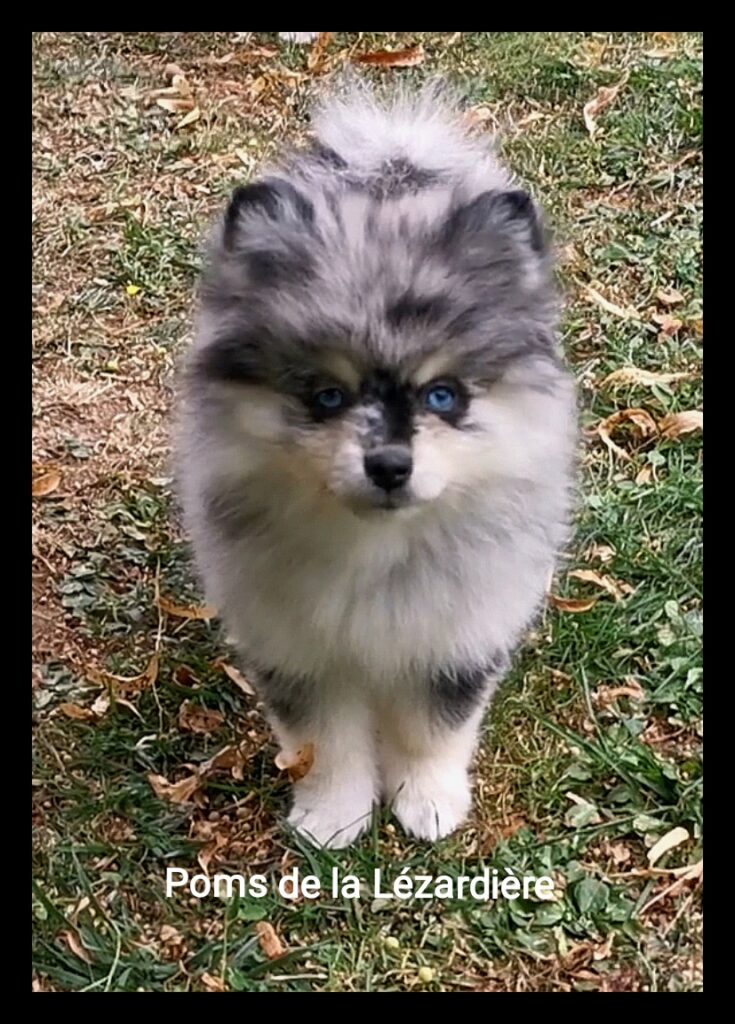
1 – Upon arrival: the first moments count
Place your puppy on the floor and let him explore his new home at his own pace.
He needs to explore, sniff, and observe… This is how he begins to feel at home.
Calm is essential. A gentle and soothing atmosphere will help him gain confidence.
If there are children, explain to them that it’s important to speak softly and not run or move around him. Reunions with family and friends can wait a few days; introductions will happen gradually.
Upon his arrival, restrict his access to certain rooms so he naturally understands which areas are allowed and which are not. A clear framework is reassuring for a puppy.
Remember that he has just been separated from his mother, siblings, and breeder. Everything is new to him: the smells, the sounds, the routines. He needs time to get his bearings.
Let him come to you. Don’t force him. Trust is always built gently.
After a few days, you’ll sense he’s more relaxed, more curious, and more at ease. He’ll then be ready to meet new people and begin his first learning experiences.
And remember:
one word = one command.
Choose a simple word and always use the same one. Consistency prevents confusion and makes learning easier.
The beginning sets the tone for your relationship. With patience, kindness, and consistency, you lay the foundation for a beautiful bond.
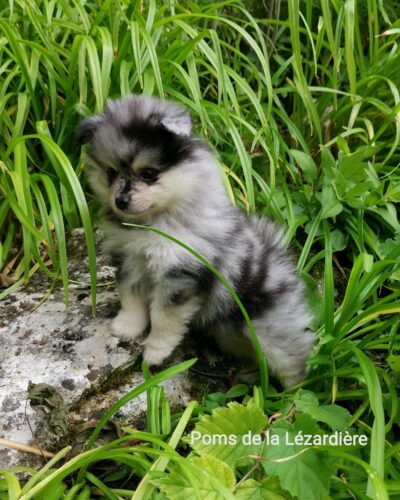
2 – Teach him his name.
Learning his name is the first step toward listening and building a relationship.
Call him gently by his first name. When he turns toward you or comes to you, praise him immediately with a pat, a cheerful voice, or a small treat.
He needs to associate his name with something positive: your attention, your smile, your satisfaction.
After each success, let him go back to his activities, then try again a little later. The sessions should remain short, simple, and enjoyable.
Repeat the exercise several times a day, calmly, and never use his name to scold him. His first name should always be synonymous with trust and pleasure.
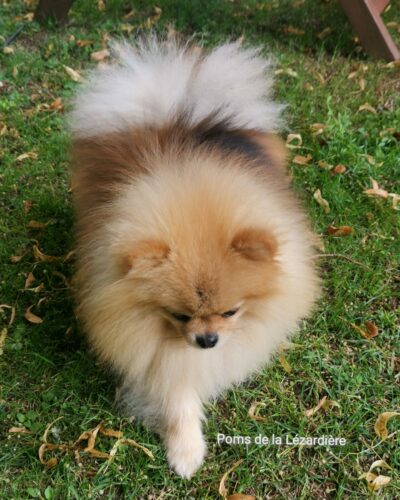
3 – Teach him his basket.
The basket is his sanctuary. It’s where he can rest, relax, and have some privacy if he needs it.
It’s important that this place remains associated with calm and security. A puppy should not be disturbed when he’s in his basket, and children should also respect this space.
To teach him to go there, simply:
Place a small treat or kibble in his basket. When he goes in, praise him gently. Let him come out freely.
Repeat this exercise several times. Place another kibble to encourage him to return. Gradually, he will understand that his basket is a pleasant and safe place.
Never force him to go in. The goal is for him to go there on his own, with complete confidence.
🌙 The First Nights
The first few nights can be unsettling for a puppy who has just left its mother and siblings. It may cry or seek company: this is normal.
Place its bed in a reassuring location, perhaps near your bedroom at first if you feel it’s necessary. Your calm voice and your presence will help it feel safe.
However, avoid automatically bringing it into your bed if it cries, unless it’s a deliberate choice you intend to maintain long-term. Consistency is key.
An object with the breeder’s scent or a piece of fabric with your scent can also soothe it.
With patience, consistency, and a reassuring environment, the puppy will quickly find its rhythm and learn to sleep peacefully through the night.

4 – teach him to to pee and poo outside
House training requires consistency, patience, and a lot of kindness.
To help your puppy understand, it’s essential to take him out at key times of the day:
upon waking (as soon as you get up, even before your coffee),
after each meal,
after naps,
after playtime or any period of excitement.
These times naturally correspond to the puppy’s physiological needs.
Outside, choose a quiet spot and give him time to sniff around. As soon as he relieves himself, praise him warmly with your voice. He needs to associate the action with something positive.
If there’s an accident in the house, don’t scold him. Clean it up without comment. He’s never “guilty”: he’s simply learning.
With regular outings, encouragement, and a stable routine, your puppy will gradually understand what you expect of him.
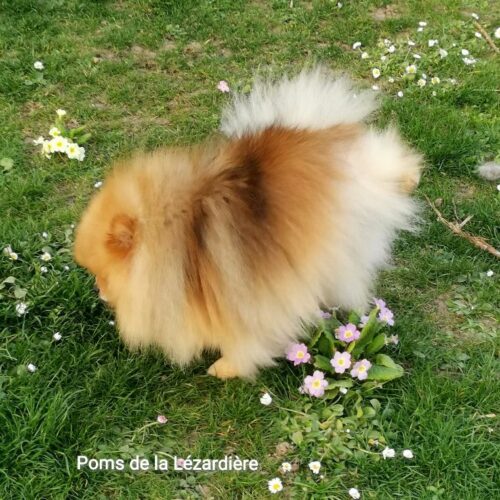
5- Teach him to be alone
Learning to stay alone is essential for your puppy’s well-being. This is taught gradually, starting from the very first days.
Begin with very short absences: just a few minutes. Leave the room without making a fuss, then return calmly, without excessive excitement.
Both your departure and your return should remain neutral. If you dramatize the moment, your puppy will understand that separation is a special event.
Gradually increase the duration of your absences. The progression should be gentle and adapted to your puppy’s pace.
You can leave him a safe, engaging toy so he associates your absence with a positive and calm experience.
Avoid leaving when he is very excited. Wait until he is relaxed, or even already settled in his bed.
If he cries slightly at first, give him time to settle down. Intervening immediately could reinforce his anxiety. However, if the anxiety persists, you will need to slow down the pace of the training.
The goal is for him to understand that you leave… but that you always come back.
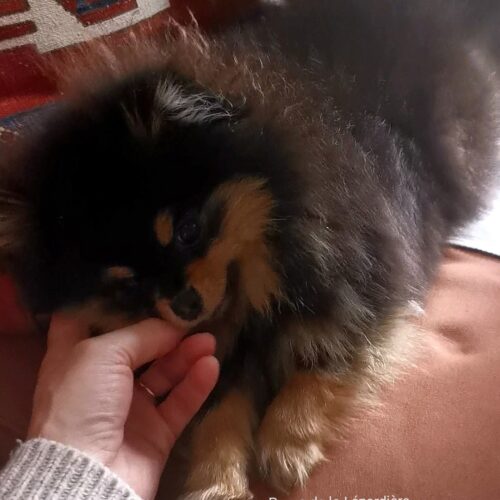
6 –teach him not to nibble on you
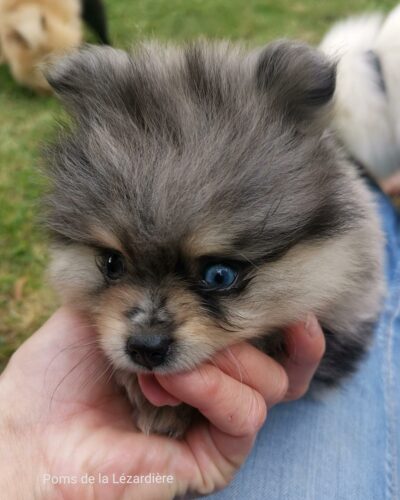
Nipping is a natural behavior for puppies. They explore the world with their mouths and, with their siblings, they learned to play by nipping at each other.
It’s important not to scold him. He’s not trying to hurt you; he’s learning.
However, he needs to understand that your hand isn’t a toy.
When you pet him and he doesn’t nip, praise him gently. He needs to associate the calm touch with something positive.
If he tries to nip, immediately remove your hand, saying a soft “ouch” or “no” in a firm but calm voice. Then briefly stop interacting. He’ll understand that playtime ends when he nips.
Then resume the exercise gently. Repetition and consistency are key.
You can also offer him a suitable chew toy to redirect his natural urge to chew.
6 –“foolery”
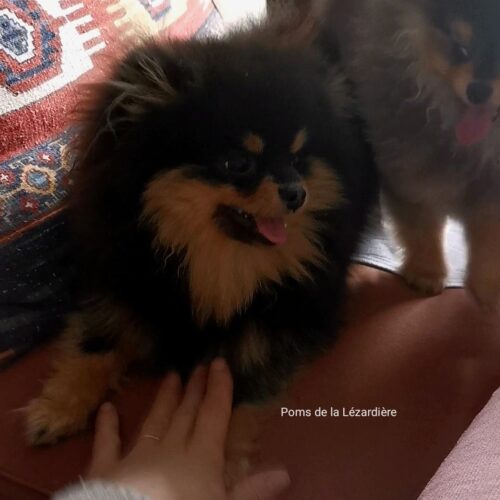
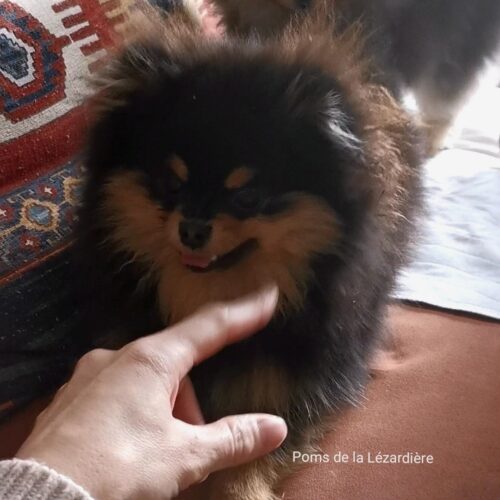
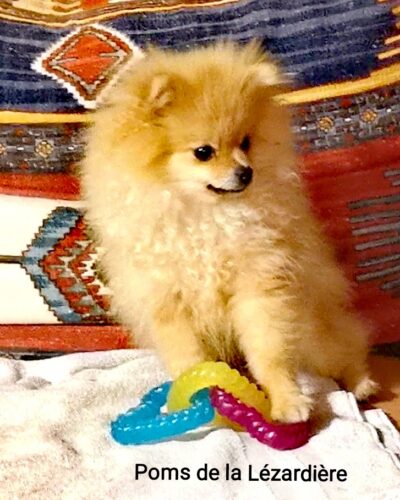
A puppy naturally needs to chew. For him, it’s not naughty: he’s exploring, discovering, and relieving himself (especially during teething). He doesn’t yet know what’s allowed or forbidden.
It’s up to you to teach him, with patience and consistency.
He needs to understand that he can chew and handle his toys, but not your personal belongings.
Using a toy box is very helpful. It allows him to clearly identify what belongs to him.
If he starts chewing on a shoe or an inappropriate object, don’t yell. Calmly remove the object and immediately offer him a suitable toy. Encourage him when he shows interest.
Then let him play quietly.
With repetition, he will gradually understand where he can direct his natural need to chew.
Redirect rather than punish.
7 – Take him out to socialise.
Socialization is an essential step for your puppy’s well-being and future stability.
At home, he has already begun to explore his environment: family members, other dogs present, possibly other animals, and everyday noises.
But the outside world is different.
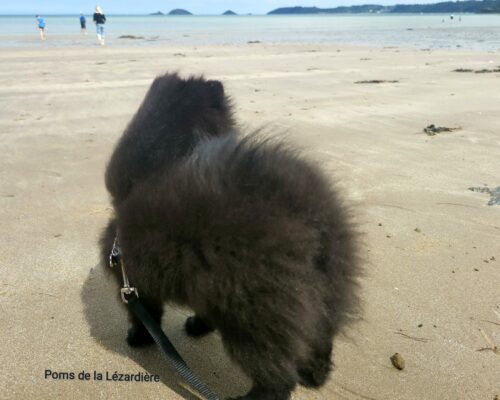
For safety and hygiene reasons (until his vaccinations are complete), your puppy is not yet familiar with parks, the city, busy streets, strangers, or dogs and animals he doesn’t usually encounter.
It’s important to gradually introduce him to these new environments.
Expose him to different sounds (cars, bicycles, strollers), people of all ages, and various situations, always in a positive and reassuring way. Experiences should be short, calm, and age-appropriate.
Never force him if he seems anxious. Stay close, speak to him softly, and let him observe at his own pace.
Every positive experience builds confidence and prevents future fears.
A well-socialized puppy grows into a balanced, calm, and adaptable adult dog.
8 – Prevention: vaccines and anti-parasites
Prevention is essential for the long-term health of your puppy.
The first vaccination and microchip implantation are performed by my veterinarian around 8 weeks of age. A booster is given at 3 months and then at 4 months to ensure effective protection against major diseases.
Therefore, an annual booster will be required on the anniversary of the initial vaccination.
In addition, regular parasite treatment is essential.
Worming
The puppy must be dewormed regularly:
up to 2 months: according to the protocol established by the veterinarian,
from 2 to 6 months: once a month,
after 6 months: every 3 months.
As an adult, it is recommended to deworm approximately 3 to 4 times a year, depending on their lifestyle.
External parasites
It is also important to protect your dog against fleas, ticks, and other external parasites. Your veterinarian can advise you on the most appropriate treatment.
Regular preventative care helps avoid many illnesses and contributes to your pet’s comfort.
Monitor the following daily:
their appetite,
energy level,
stool consistency,
and the condition of their eyes, ears, and teeth.
Any change in behavior (lethargy, persistent diarrhea, repeated vomiting, loss of appetite) should prompt you to consult a veterinarian promptly.
Your puppy may not want to do the exercise. He has the right to do so. Do not force him. Perhaps he is tired or simply needs to be left alone.
Repeat the exercise later.
30 Million Friends Foundation
Foundation for the protection and defence of animals.
Children have to learn too!
Video explanations by Nicolas GREVELDINGER
Dog trainer
More information
Stimulating the puppy, socialising him to all types of humans, dogs, other species, continuing the training, are very important steps.

