Glossary
“Vocabulary is a rich pasture of words.”
Homère
The different types of education
Coercive method
or traditional method
The traditional method: Pavlovian conditioning
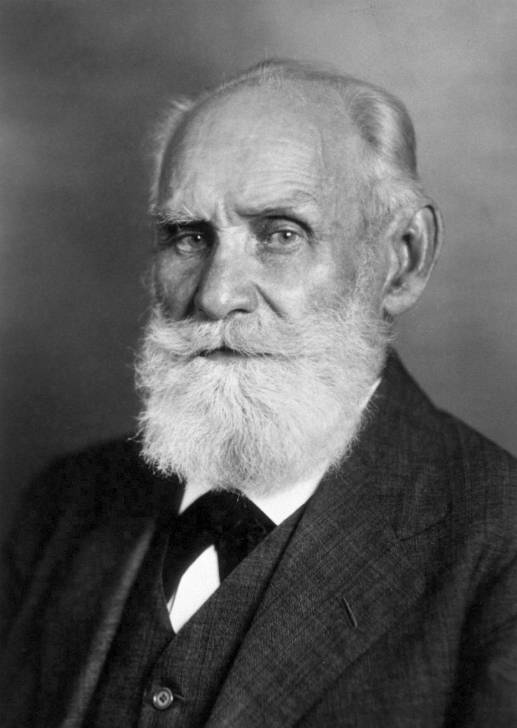
The coercive, or classical, method is based on responsive conditioning. Ivan Pavlov, a Russian physician and physiologist (1849-1936), developed this method of education.
The man, who fed his dog at the same time every day, realised that as mealtime approached, even before he brought the bowl near the dog, the dog started to salivate. He knew, in a way, that mealtime was approaching, and so he prepared his body accordingly. Pavlov soon realised that certain habits, such as fixed meal times, could lead to innate reflexes in the animal, such as the excessive salivation produced when food is eaten. What if, with other habits, the dog could acquire new reflexes?
To prove his theory, Pavlov then tested several sound stimuli at mealtime, including the famous jingle bell, by repeating them each time he brought food to his dog. After a while, the mere perception of the sound, without even bringing the bowl, made the animal salivate. He therefore concluded that learning, due to the combination of external stimuli and innate reflexes, could be possible.
Pavlovian conditioning, also called responsive conditioning or classical conditioning, means that the dog acquires reflexes involuntarily and automatically.
In the traditional method, the dog is conditioned by the use of painless aids such as collars, leashes and whistles, as well as rewards and sanctions.
Accessories are important, as they make it much easier for the animal to understand you. For example, if the dog pulls on its lead, it will get a bell (the owner also pulls on the lead). It is unpleasant, but it stops if it returns to the foot. Since escaping pain is a natural reflex, the dog quickly understands that if he wants to avoid pain, he must not pull on the leash.
The dog reacts rather than acts.
reference : chien.com-dog training methods
Positive method
The positive method: operant conditioning

Methods based on reinforcement or operant conditioning were developed in the 1950s by the American psychologist Burrhus Frederic Skinner (1904-1990).
According to him, Pavlov’s work on conditional reflexes had one major flaw: it did not take into account the environment after a response had been produced. In other words, it is because the dog knows that its action will be rewarded that as soon as the stimulus is heard, it does what is expected of it. To repeat Pavlov’s experiment, if the dog salivates at the sound of the bell, it is because it knows that it will be fed next. According to the American psychologist, if salivating had not been rewarded by the bowl the first time, once the stimulus had been heard, the dog would not have started salivating as soon as it heard the noise the following times.
With operant conditioning, or responsive conditioning, the order of the sequences is reversed in the learning phase: it is the behaviour that induces the order, rather than an order – or a stimulus – that induces a behaviour. The notion of the organist’s spontaneity is thus more present.
Of course, the aim is that, in the use phase of learning, the behaviour is caused by the command. But we are talking about a training method here, teaching a dog a new behaviour.
With the positive reinforcement method, the dog becomes an actor in its learning.
The dog acts rather than reacts.
reference : chien.com-dog training methods
Natural method
The natural method: learning without constraints

The natural education method was invented in the early 1980s. Joseph Ortega, a field ethnologist, was its creator.
It was after observing packs of wild wolves that his idea of unconstrained learning for education was born, which he later named the natural method.
He observed that in wild wolves, when the mother returns from hunting, she emits a signal, and the cubs immediately come running: to survive, they need to feed. The cubs do not take their eyes off their mother’s actions, reacting instinctively to the slightest of her movements: if she raises her head, the cubs lick their lips and sit down; if she lies down, they remain fixed on her lips and also lie down; if she walks, the cubs remain glued to her sides, their heads turned towards her. Their primary instincts guide their actions.
If we transpose this situation to a puppy and his owner, it is enough for the owner to have a treat or a dog toy between his fingers for the motivation to be the same, and for him to have the full attention of the little animal. He can then get him to do whatever he wants, such as sit by raising the treat or toy in the air, or walk by holding the reward against the animal’s muzzle. Here too, primitive instincts guide the puppy. And it is these innate tendencies that will drive the dog’s education. He learns without knowing.
Ortega’s method is based on many principles of modern ethnology:
- You must respect the dog, its personality, and use its natural behaviour without imposing many constraints. The master must also show empathy, and know how to put himself in the animal’s shoes, trying to think like him in order to understand his reactions (desires or reticence) and anticipate them.
- Innate tendencies: This category includes the use of food, play and dog toys, imitation, positive signals from the owner (praise, stroking, etc.), but also the use of situations that are pleasant for the dog (going for a walk, etc.).
- Use of motivation: If the dog wants to have something enjoyable, such as a treat or a favourite toy, it will be more motivated to learn. The stronger the dog’s motivation, the faster and more naturally it will learn.
The underlying idea is that there is no action without motivation, whether in humans or animals. Motivation has nothing to do with intelligence or reason, but is based on an inner need, a strong desire, and is activated by a specific signal that will then mobilise the individual’s full attention and drive him or her to action, in order to fulfil the need. The natural method uses this powerful need in the dog to achieve the goals desired by the owner or trainer. - Cognitive learning is the learning and acquisition of awareness of events in the environment and the representation of an event or object through the dog’s intelligence and cognition. With the natural method, the handler trains the dog by posing simple problems that the dog must solve using all his senses, such as finding his toy under several cones.
The natural method proposes to start training well before the dog is six months or one year old, as is the norm in dog training clubs using the classical training method or the positive training method. As soon as the puppies are pre-weaned at the breeder’s, around the fourth week, the natural training method can be implemented. Indeed, it is at this age that the notion of motivation appears, as with the first bowls or toys and other play objects.
Around its seventh week, when its sensory receptors are most sensitive, the puppy memorizes references to the environment in which it lives, which it will use later on. As soon as the dog is adopted, the owner must therefore take over from the breeder to gently lay the foundations of its education.
In general, with the natural method, in one session, a two or three month old puppy is able to learn sit, down, recall and heel commands, all without a leash.
reference : chien.com-dog training methods
Bite inhibition
. Bite inhibition involves teaching your puppy to moderate the strength of his bite. When puppies play together, they learn together. When a puppy bites too hard, the other puppies scream to let him know that he has gone too far.
Music
Dogs have a high level of hearing acuity and sensitivity than we do. Their ears are therefore very well designed to appreciate music.
There is evidence that soft-sounding music, such as classical music, can have beneficial effects on dogs:
- Reduce anxiety in the distressed dog,
- Calming a hyperactive dog,
- Bringing joy to a depressed dog,
- To soothe the daily life of a very sick or temporarily ill dog,
- Enabling the dog to cope better with loneliness, for example when it is alone at home,
- To facilitate the education of dogs with behavioural problems.
These are just a few examples of the benefits of listening to music for dogs, but anyone can test their dog to see which style of music has the best effect on them.
In any case, it is safe to say that classical music (to which cats are totally insensitive) makes everyday life more pleasant for most canines. Like a natural tranquilizer, music soothes dogs, puts them in a state of zenitude and makes them happy as long as the music is well chosen and the volume remains moderate.
Some veterinary clinics play music in the waiting room or surgery room: it helps to soothe the animals and their owners!
A study was also carried out in a shelter by an American behaviourist: dogs are calmer when listening to music and therefore more adoptable than more agitated dogs. étude
reference : santevet.com-the music the sound and my dog
“Music gives a soul to our hearts and wings to our thoughts.”
Platon
Sudoriparian gland
There are two kinds of sweat glands. The main role is to produce sweat.
Apocrine sweat glands are present in the anal and genital regions and in the armpits. They are always attached to a hair follicle, where their secretory duct ends. They are characterised by the evacuation of apocrine sweat, which they secrete, and of part of the cellular material, close to the terminal part of the gland’s excretory duct. Apocrine sweat, which is viscous and has a particular odour, has a poorly understood role in humans; in animals it contains pheromones, odorous substances that influence social and sexual behaviour.
Eccrine sweat glands, which are much more numerous than apocrine ones, predominate on the palms of the hands and soles of the feet. They have an excretory canal that opens on the surface of the skin through an opening, the pore. Eccrine sweat, rich in water and sodium chloride (salt), is involved in the regulation of body temperature: when the external temperature tends to rise, the vegetative nervous system controls the secretion of sweat, the evaporation of which causes heat loss; other factors, such as stress and certain pharmacodynamic agents (acetylcholine, adrenalin), can also trigger this secretion.
In humans these glands are distributed throughout the body and are very active in hot weather. The evaporation of sweat causes the skin to cool.
Both dogs and cats have sweat glands, but those on the body produce skin protection and pheromones. This is why it is said that dogs and cats do not sweat.
This, however, is not true, as both animals have sweat glands in their paws, between the pads. Both dogs and cats sweat from their paws, butthe surface area is so small that it does not cool the body.
reference: Larousse.fr
reference: conseil-veto.com – Dr Eric Trenel – Vétérinaire
Pheromones and hormones
Pheromones are chemical substances secreted by living organisms (animals or plants) that allow individuals of the same species to communicate with each other by smell, similar to hormones. As they move through the air, these substances carry real chemical messages that the animal or plant picks up from its environment. This innate method of communication, although little known, is crucial for many living beings, and more particularly for insects: it is thanks to pheromones that an ant will find its way back to its anthill and indicate to its congeners a source of food that it has found.
Pheromones were discovered in the 1960s. They were first discovered in insects, thanks to the work of a French entomologist named Jean-Henry Fabre. He succeeded in showing that the sex pheromone secretions of a female butterfly could attract males from a radius of 25 kilometres. Their existence in mammals was confirmed a little later, and it is now proven that pheromones exist in most animal species.
In mammals, pheromones are best known for their role in reproduction.
They generate a particular behaviour in the dog, which is also found in other species such as horses: flehmen. When a dog detects sexual pheromones, it curls its lips, opens its jaw and sucks in air with small tongue movements. This attitude serves to capture sex pheromones in a nerve organ located above the palate, the vomeronasal system. The pheromones are not directly captured by the olfactory system itself, but by this organ which then transmits them by nerve conduction to the olfactory bulb, the nerve centre of the dog’s sense of smell.
Depending on its physical and emotional state, the dog will emit different pheromones which will be received and decoded by its fellow dogs.
Thanks to advances in pheromone research, many other roles have been associated with them. Today, pheromones are seen as real business cards, allowing a significant amount of information to be given:
- they provide information on the physiological condition, gender and identity of the sender;
- they give information on the occupation of a territory, useful in the context of pack movements;
- If a dog makes a deposit under the influence of fear, the next dog will know it thanks to the pheromones, and will be aware of a possible danger;
- They allow a puppy to feel secure when placed in a new environment.
In the dog, the average age of puberty is estimated to be between 6 months and one year, whereas in its ancestor the wolf, puberty occurs at around 2 years. However, there are wide variations according to size and breed:
- Small breeds of dogs reach puberty between the 5th and 6th month;
- Medium-sized dogs reach puberty between the 6th and 10th month;
- In very large dogs, such as Great Danes, it may take up to 18 months.
Overall, there is little difference between males and females, who reach puberty at about the same age. In females, it is very often their weight that influences the age of puberty: they traditionally come into heat when they reach 80% of their adult weight.
reference : chien.com
Carl von Linné (Carl Linnaeus)
Carl von Linné (Carl Linnaeus)
Rashult, Sweden, 13/23 May 1707 – Uppsala, Sweden, 10 January 1778

by Johan Henrik Scheffel
Hammarby (near Uppsala), Linné fondation
© AKG-images
“Alone with nature and you, I spend in my country walks delightful hours, and I derive more real profit from your Philosophia Botanica, than from all the books on morality. “This sentence, which Jean-Jacques Rousseau, a recent convert to botany, wrote to Carl von Linné in 1771, is that of a student to his teacher.
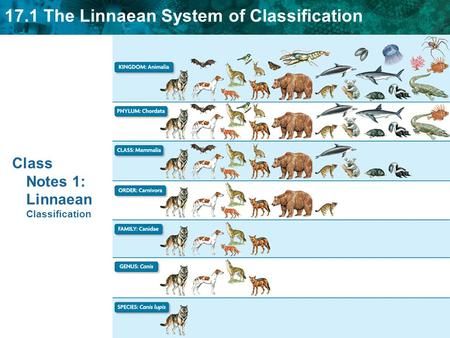
Linnaeus is the emblematic figure of European natural history in the 18th century. In 1735, this Swedish naturalist published the work that was to make him immortal: the Systema naturae. He sets out a rigorous classification of the three kingdoms of nature, which he divides into classes, orders, genera and species. His classification of plants, in particular, earned him worldwide fame. Linnaeus divided the plant kingdom into twenty-four classes according to the number of stamens and their position in relation to the pistil. The first class includes plants with only one stamen, the next those with two, and so on, with a few exceptions. The twenty-fourth class includes plants with no visible sexual organs, such as ferns or algae. To make his system clear, Linnaeus explains the scientific description of each of his classes with anthropomorphic metaphors that his detractors would denounce as ‘lewd’. With him, botany became a popular science.
The animal kingdom is divided by Linnaeus into six major classes. Man, studied as any other species, is placed by him in the class of “Quadrupeds”, within the order Anthropomorpha, together with the monkey and the sloth. Here again, many people, like La Mettrie, Buffon and Diderot, protested against this treatment of man. Linnaeus heard their criticism and, in the tenth edition of his Systema naturae, published in 1758, he substituted the name “Mammals” for “Quadrupeds” and named his anthropomorphs “Primates”. It was also in this tenth edition that Linnaeus generalised the use of a Latin binomial nomenclature to name each animal species: from then on, the human species was called Homo sapiens, the chimpanzee Pan troglodytes, the dog Canis familiaris, etc. Four years earlier, he had done the same for plants. The date of 1758 is now considered by the international scientific community as the starting point of modern zoological nomenclature. All newly discovered species continue to be named and described according to the principles laid down in the 18th century by Linnaeus.
Linnaeus’ world, however, has nothing in common with that of today’s biologists. God and the Bible are central to it. Linnaeus, a shepherd’s son, is convinced that he has been chosen by God to restore the order of creation. “Deus creavit, Linnaeus disposuit‘ is his motto. His contemporaries call him the ‘second Adam’. According to Linnaeus, the Earth was originally covered entirely by oceans, with the exception of one island below the equator: Paradise. Six thousand years ago, God created the plant and animal species as
described in the Genesis account, and then presented them to Adam so that he could give them a name. Since then, the waters have gradually receded, leaving habitable land that plants and animals have gradually colonised. The species living today, Linnaeus thought, are identical to those created by God at the origin of the world. None have disappeared, and no new species have appeared. Linnaeus is a creationist and a fixist.
Hailed throughout Europe and the world, Linnaeus’ classificatory and nomenclatural work, and the theological presuppositions that underlie it, have never been unanimously accepted in France. The botanists Bernard and Antoine-Laurent de Jussieu opposed the Linnaean sexual system with a more natural method of classification, based on the subordination of characters, which was adopted in the Jardin du Roi from 1774. Michel Adanson vehemently contests the interest of the binomial nomenclature. As for Georges-Louis Leclerc, comte
de Buffon, intendant of the King’s Garden for fifty years, he saw in Linnaeus’s enterprise little more ‘than scaffolding to arrive at science, and not science itself’. A view shared by Maupertuis and Diderot.
All the conditions therefore seemed to be met in France for Linnaean taxonomy to sink into oblivion after Linnaeus’ death in 1778. However, this was not the case. The first Linnaean Society was founded in Paris in December 1787, two months before the one in London, which is still active. In August 1790, a bust of the great man was inaugurated with great pomp in the Jardin du roi, under the cedar of Lebanon planted at the foot of the labyrinth. The revolutionaries were enthusiastic about the terseness of the new language he had given botany and
zoology. With the cult of Rousseau, natural history became fashionable. Freedom trees, which must be chosen with care, are planted all over the country. The republican calendar becomes rural. Natural sciences are taught in the central schools that replaced the colleges of the Ancien Régime.
Thus a neo-Linneanism gradually emerged which, under the Restoration, found its most spectacular expression in the multiplication of Linnean societies: Bordeaux in 1818, Paris in 1821, Lyon in 1822, Caen in 1823, etc. The same thing happened elsewhere in the world: Philadelphia in 1806, Uppsala in 1807, Boston in 1813, etc. All these societies, which were open to women in France, celebrated a veritable cult of Linnaeus, particularly during learned country festivals, known as Linnaean festivals, whose ritual was carefully codified. The fight they waged in the first half of the nineteenth century for a return to Linnaean dogmas, as set out for example in the Philosophia botanica (1751), so dear to J.-J. Rousseau, has long seemed anachronistic. However, it made it possible to realise the need to stabilise and harmonise scientific nomenclature. At the end of the 19th century, this was the work of the international codes of nomenclature which, even today, give absolute priority to Linnaeus’ writings. Until when? The current phylogenetic classification of living organisms is becoming increasingly difficult to reconcile with a nomenclature that was conceived some 250 years ago within a resolutely fixist framework. However, for the time being, no biologist has managed to propose a different classification that is unanimously accepted.
Pascal Duris
lecturer in epistemology and history of science at the University of Bordeaux 1
Source: Commemorations Collection 2007