Collar or harness?
The choice between a collar and a harness should be based on your dog’s individual needs: age, build, health, behavior, and training level.
If your dog has neck problems, pulls a lot on the leash, or is still learning, a harness will often be more comfortable and secure during walks.
Some dogs, however, don’t like wearing a harness and will clearly express this: they walk more slowly, freeze, or refuse to walk. It’s therefore important to observe your companion and adapt your choice to their well-being.
The advantages of a harness:
It distributes pressure more evenly across the dog’s body.
It reduces pressure on the neck and throat.
It offers better control for dogs that pull on the leash.
It is often recommended for leash training.
It reduces the risk of neck injuries, particularly in brachycephalic dogs or those with respiratory issues.
The collar’s advantages:
It allows for easy attachment of ID tags with the owner’s contact information.
It is quick and easy to put on and take off.
It is ideal for dogs that already walk calmly on a leash without pulling.
By following the advice of your breeder or trainer, and taking into account your companion’s specific needs, you can choose the most suitable equipment. The goal remains the same: pleasant, comfortable, and safe walks for both you and your dog.
harness
The harness is positioned across the dog’s chest and back. This allows the owner’s force to be better distributed across the animal’s body. Walks then become more comfortable and less strenuous for both dog and owner, unlike a collar which concentrates pressure on the neck.
Small dogs, dogs with sensitive trachea, and dogs with respiratory problems generally tolerate harnesses better than collars. This attachment system frees the neck and provides better support for the shoulders and back.
There are several harness shapes: X, Y, or T. Each model has its own specific features. It is therefore advisable to try several to choose the one that best suits your dog’s build and comfort.
How do you choose your dog’s harness?
- Choosing the right harness is essential to ensure your companion’s comfort, safety, and freedom of movement.1. Choose the right size
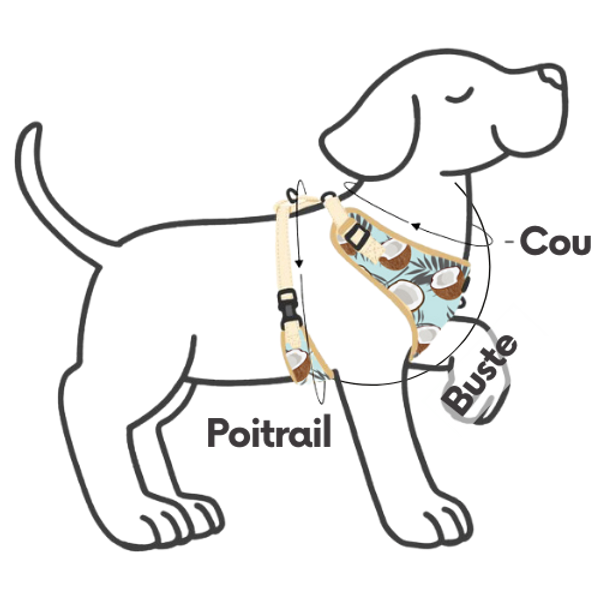
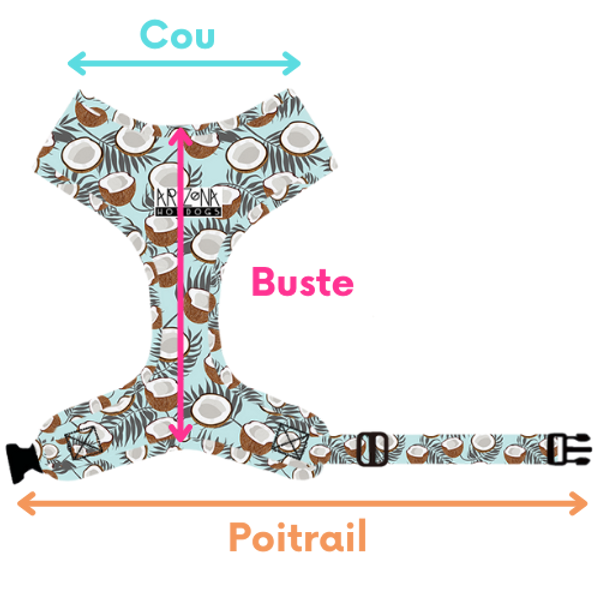
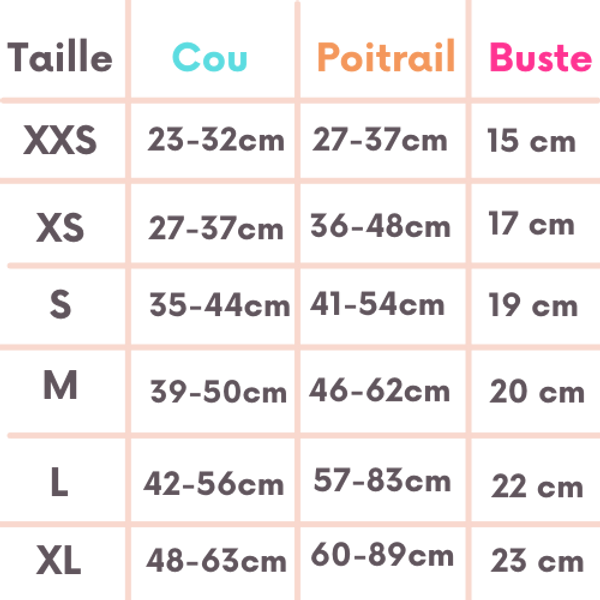
The harness must fit your dog perfectly. Measure their chest and neck circumference, then refer to the size guides provided by the manufacturer.For a puppy, choose an adjustable model to accommodate their growth.2. Adapt the model to the dog’s needs
Y-harnesses allow for greater freedom of movement in the shoulders.Some models are designed for dogs that pull.Others are better suited to dogs with sensitive necks or specific body shapes.
3. Check the quality and materials
Opt for strong, durable, and comfortable materials. The straps should be sturdy, the seams well-finished, and the buckles reliable.For a dog with sensitive skin, choose a soft and breathable material, such as lined nylon or padded fabrics.
4. Ensure comfort
The harness should not compress or restrict breathing. It should offer good freedom of movement without creating pressure points.A good rule of thumb: you should be able to fit two fingers between the harness and the dog’s body. The straps should be neither too tight nor too loose.
5. Test in real-life situations
Walk your dog with the harness. Observe its behavior: if it moves naturally, without discomfort or rubbing, the model is probably suitable.Finally, if your dog has specific issues (fragile trachea, neck pain, respiratory problems), a harness specifically designed to reduce pressure on the neck will be more appropriate.
The collar
The collar goes around your dog’s neck. It can be used to attach a leash or to hold an ID tag with your dog’s name and your contact information (in addition to the mandatory microchip).
Simple and practical, it’s especially suitable for dogs that walk calmly on a leash and don’t pull.
How do you choose your dog’s collar?
Choosing the right collar is essential to ensure your pet’s comfort and safety. Here are some tips to help you make the right choice:
1. Choose the right size
Measure your dog’s neck circumference and refer to the manufacturer’s instructions.
The collar should be neither too tight (which could be uncomfortable) nor too loose (which could easily slip off). You should be able to fit two fingers between the collar and your dog’s neck.
For a puppy, choose an adjustable model that will adapt to its growth.
2. Check the quality of the materials
Opt for strong, durable, and lightweight materials.
Avoid rough materials that could cause chafing, irritation, or allergies. A lined or lightly padded collar can offer more comfort.
3. Check the security of the closure
The buckle should be reliable and strong.
Sturdy clip closures or solid buckles are recommended. Avoid systems that are too easy to open, especially if your dog is lively or curious.
4. Adapt the use
For walks: choose a collar with a sturdy metal ring for attaching the leash.
For identification: make sure it allows you to attach a tag with your contact information.
A collar remains a practical everyday accessory, especially for identification. However, for dogs that pull or have neck problems, a harness may be a more comfortable alternative.
How do I choose the right harness size?
To measure your pet’s size, take a tape measure and measure the circumference between its back and thorax (at the withers, just above the front legs). To help you, follow the Arizona Hotdogs size guide in the table below:
For our dogs weighing between 1.5 and 5 kg, we need a mini harness that adapts to their size. An H- or Y-shaped harness with breathable material is ideal, especially if your dog has long hair.
H-shaped to hold dogs weighing less than 2.5 kg, with an XXS size;
Y-shaped, very comfortable for dogs weighing between 2.5 and 5 kg and measuring from XS to S.
References: -Dr Fanny Fourniret, veterinary surgeon at the Puiseux-Pontoise and Vauréal clinics
-Arizona Hotdogs.com