The puppy’s first days
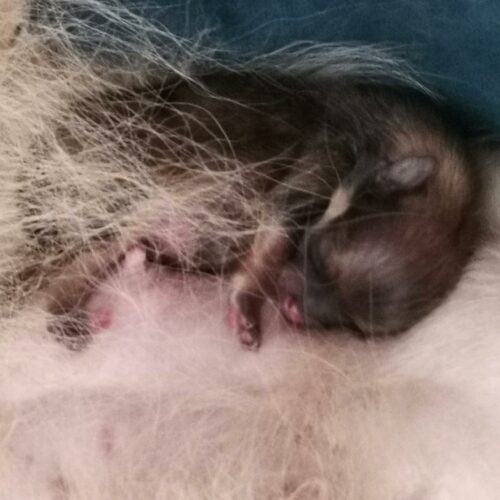
The first few hours of a puppy’s life are crucial. At birth, it is completely dependent on its mother… and the breeder’s vigilance. Its body is still immature, its reserves are limited, and its ability to adapt remains fragile.
During this critical period, three fundamental needs must be met with rigor and care:
the warm
the energy supply
Close monitoring from the first hours helps to secure the start of life and gives each puppy the best chance of development.


The warm
Warmth is one of the primary conditions for the well-being and survival of newborn puppies.
🌡️ Nest Temperature
Nest temperature plays a crucial role during the first few weeks of life.
Recommended guidelines:
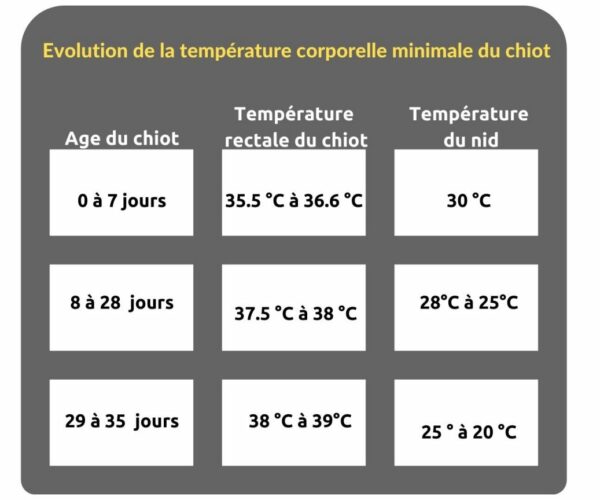
First few days: 30°C (86°F)
Gradually decrease to around 28°C (82°F)
Second week: from 28°C (82°F) to 25°C (77°F)
Third week: Gradually decrease
Fourth week: around 20°C (68°F)
This decrease should always be gradual, while observing the puppies’ behavior.
🌡️ Inability to Thermoregulate
From birth until about 3 weeks of age, puppies are unable to regulate their internal temperature on their own.
Their body temperature is approximately 3°C (9°F) lower than it will be at around 5 weeks. It is unstable and directly dependent on the ambient temperature.
They are therefore particularly sensitive to cold.
Too low a temperature can lead to:
Hypothermia
Stopping of the suckling reflex
Rapid weakening
Possible rejection by the mother
🔥 Heating Methods
Several devices can be used:
Infrared lamp, set at the correct height
Heating mat
Hot water bottle
⚠️ Mats and hot water bottles require close supervision due to the risk of burns.
A simple indicator:
If the puppies are gathered calmly under the lamp → the temperature is suitable.
If they scatter to the corners of the crate → the temperature is unsuitable (too hot or unevenly distributed).
If they consistently move away from the heated area → the temperature is too high.
It is essential to provide a cooler area in the nest so that the mother and puppies can move around as needed.
🎯 Objective
Maintain the puppy’s body temperature above 36°C (97°F).
⚠️ Crucial point: Weak puppy or puppy not nursing
If a puppy:
is not nursing,
appears weak,
is rejected by its mother,
➡️ The first thing to do is check its rectal temperature.
Below 34°C (93°F), a puppy can no longer digest food.
Therefore, do not nurse or bottle-feed it until it has been gradually warmed.
Warming must be gentle and gradual to avoid thermal shock.
Hydration
In newborn puppies, hydration is naturally ensured through nursing.
🍼 The Essential Role of Colostrum
It is essential to put puppies to the breast as early and as often as possible, when they are not yet able to nurse spontaneously.
Colostrum plays two fundamental roles:
It provides maternal antibodies, essential for the newborn’s immunity.
It helps prevent dehydration.
A puppy’s body contains approximately 80% water, and its skin lacks a protective stratum corneum. Therefore, it can dehydrate very quickly.
⚠️ What to do if a puppy doesn’t nurse?
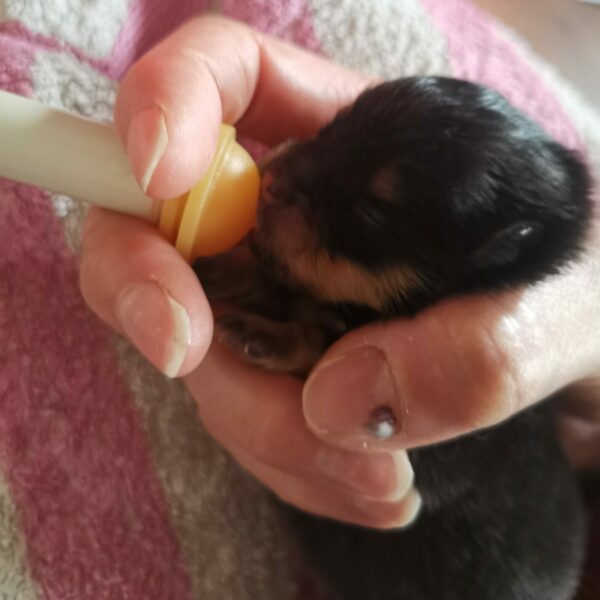
If a puppy doesn’t nurse during the first few hours of life, it will need to be artificially hydrated:
with sugar water,
or puppy formula,
using a small syringe (without a needle).
⚠️ Before feeding, ensure your puppy’s body temperature is correct (above 36°C). A hypothermic puppy cannot digest food.
🌫️ Importance of Humidity
Humidity refers to the level of moisture in the air.
In the whelping box, it should not fall below 55%, ideally around 65%.
It is recommended to place a hygrometer near the whelping box to adjust the ambient humidity with humidifiers if necessary.
📌 Beware of Excesses
An atmosphere that is too dry (below 35%) promotes dehydration.
An atmosphere that is too humid (above 80%) promotes bacterial growth and can hinder the puppies’ breathing.
Therefore, maintaining balance is essential to preserving the health of newborn puppies.
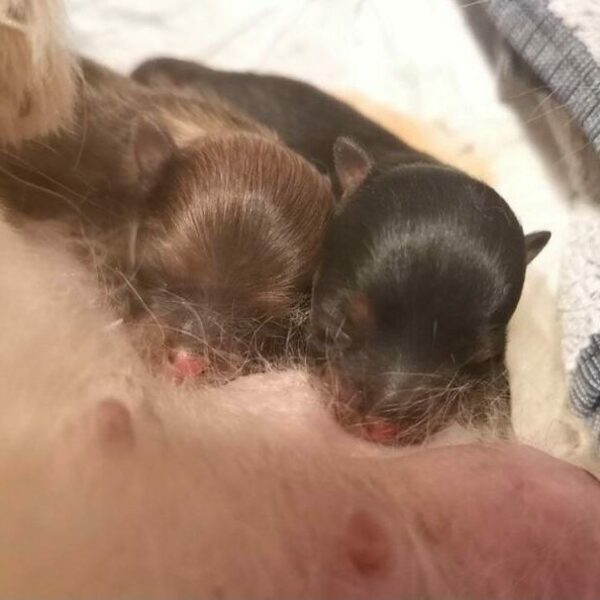
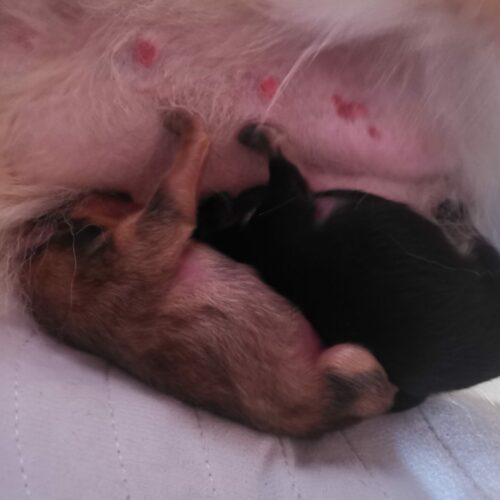
Energy
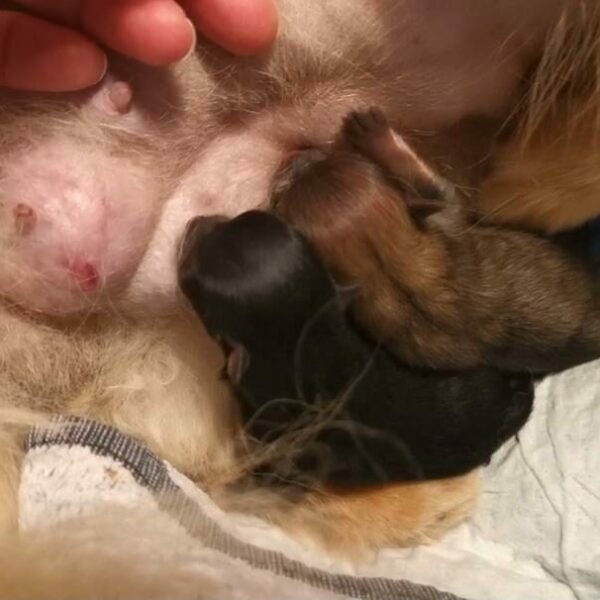
During the first few days of life, a puppy’s energy is provided exclusively by colostrum, and later by its mother’s milk.
🍼 The Fundamental Role of Colostrum
It is essential that puppies nurse on colostrum as soon as possible after birth.
Colostrum fulfills several vital functions:
It provides an immediate source of energy, essential for maintaining vital functions.
It helps prevent dehydration.
It strengthens the puppy’s immunity.
Colostrum absorption allows for the transfer of systemic passive immunity, provided it is ingested within the first 8 to 12 hours of life. After this time, the intestine’s ability to absorb antibodies decreases rapidly.
⚠️ A life-or-death situation
A newborn puppy’s energy reserves are very limited.
Insufficient intake can quickly lead to:
Hypoglycemia
Weakness
Loss of suckling
Chilliness
Life-threatening
A weak puppy must be treated immediately, with its body temperature checked before any attempt to feed it.
The first few days of a puppy’s life are a fragile yet crucial period. At this stage, everything depends on a precise balance between warmth, hydration, and energy intake.
A puppy that is warm, well-hydrated, and nursing properly has every chance of getting a good start in life. Conversely, even a slight imbalance can quickly lead to weakness.
The breeder’s daily vigilance—monitoring temperature, checking weight gain, and observing behavior—is the key to responsible and attentive breeding. Being present, observing without disturbing, and intervening only when necessary: this is the right balance.
Supporting a birth and the first few days of life is a profound commitment. It is a demanding, yet unique, time where every action counts.
More information?