
I – Brushing
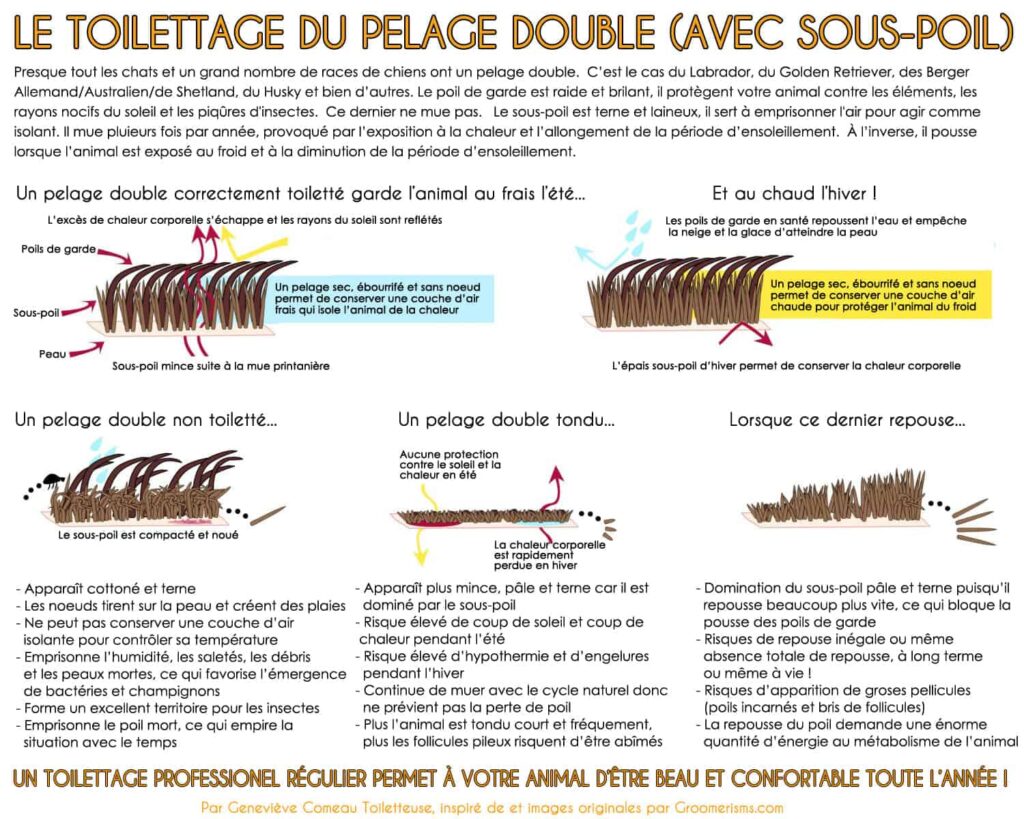
Brushing removes dead hair, but it also plays a vital role in coat regeneration.
Through its mechanical action, it stimulates blood microcirculation at the base of the hair, which:
promotes regrowth and renewal of the undercoat (particularly important before winter),
removes dead hair and lightens the fur,
contributes to better temperature regulation, especially in summer.
How to brush a German Spitz?
Never brush a dry coat.
Use a moisturizing or detangling spray specifically formulated for long-haired dogs to make brushing easier and prevent breakage.
Recommended method:
First, brush with a long-bristled brush.
Then, use a wide-toothed comb to check for any remaining knots.
Use a slicker brush if necessary to remove any knots and dead undercoat.
Brushing should not be superficial.
It is important to work thoroughly, parting the fur strand by strand to reach the undercoat. This aerates the coat and prevents matting.
What is the ideal brushing frequency?
🐾 For puppies
Get your puppy used to short, regular brushing sessions from the moment they arrive.
Brushing 2 to 3 times a week is sufficient outside of shedding season.
The goal is both educational and aesthetic: the puppy learns to stay calm and accept handling.
🐾 For adult dogs
For routine maintenance, brushing twice a week helps keep their coat healthy and well-ventilated.
During shedding season (spring and autumn), it is recommended to brush 3 to 4 times a week, or even daily if there is significant hair loss.
Remember:
Consistency is more important than duration:
Short, frequent sessions are better than long, occasional brushing.
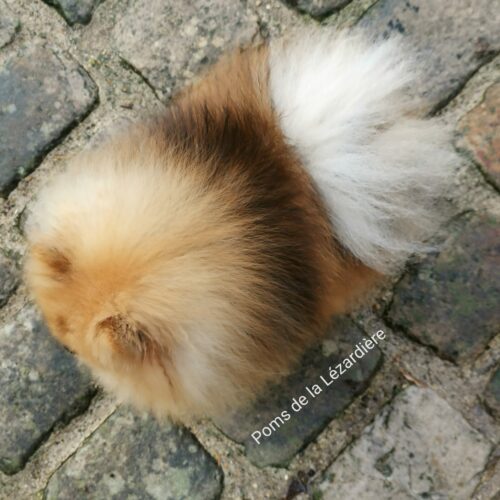
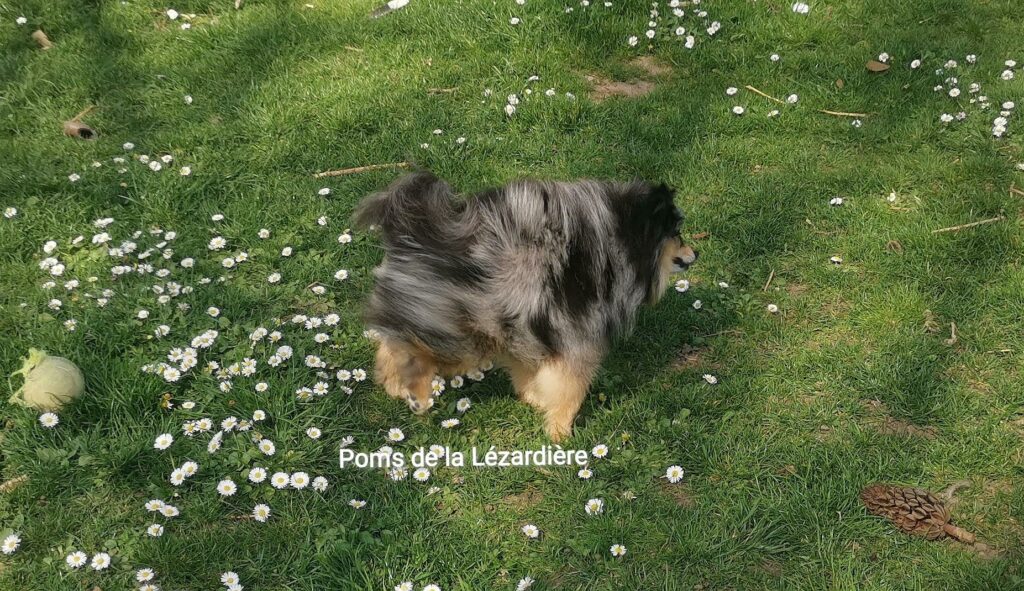
How to brush your dog? by Nath Dibella
II – Bathing and Drying
The Bath
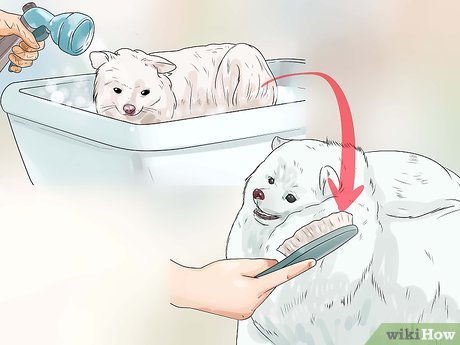
Thoroughly wet your German Spitz, being careful to avoid getting water in the ears and eyes.
Apply a shampoo formulated for long-haired dogs, with a neutral pH, possibly enriched with keratin to maintain coat quality.
If necessary, follow with a conditioner to nourish the coat and make detangling easier.
Start with the head (being careful around the eyes and ears), then continue down the body, finishing with the tail. Don’t forget the belly and paws.
A thorough rinse is essential to remove all product residue, which could irritate the skin.
A properly performed bath leaves the skin clean and the coat nourished, soft, and moisturized.
Drying
First, dry your dog with absorbent towels.
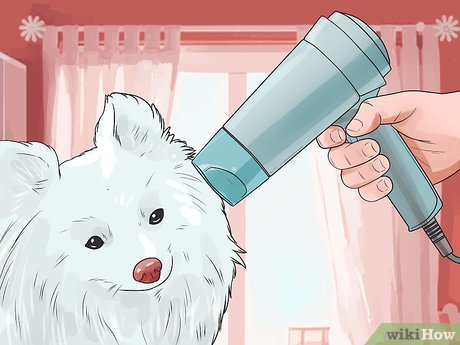
Then, use a hairdryer (warm air, never too hot) while brushing the fur section by section to dry thoroughly, down to the undercoat.
Complete drying is essential: a damp coat can encourage the development of parasites or skin problems.
Proper drying will also make brushing easier and help restore volume to the double coat.
How often should you wash a German Spitz?
The German Spitz does not require frequent baths.
For routine maintenance, a bath every 8 to 10 weeks is generally sufficient, depending on:
its lifestyle (indoor/outdoor),
its activity level,
the condition of its coat.
Bathing too frequently can damage the skin’s natural protective film and weaken the coat.
However, a bath can be given occasionally if the dog is particularly dirty (mud, sand, odor).
Remember:
The quality of brushing is more important than the frequency of baths.
A well-groomed and regularly brushed Spitz stays clean longer.
III – Nail, Teeth, Eye, and Ear Care
Nails:
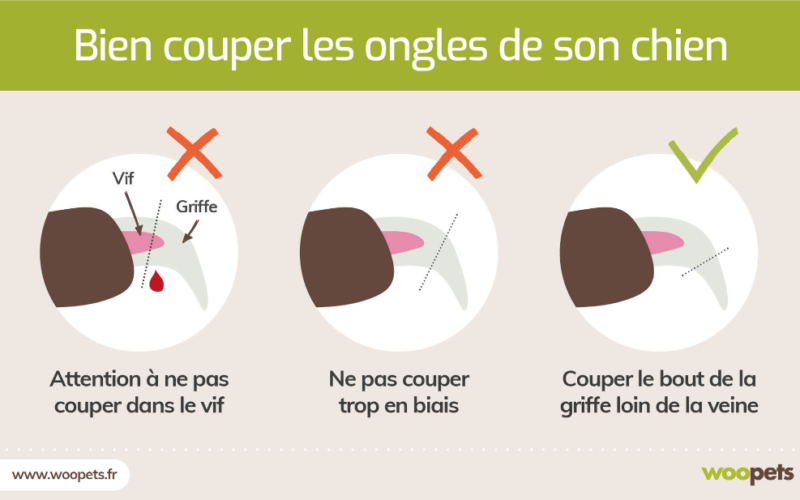
Only trim a few millimeters of the nails (the quick may be very long) to avoid injuring your dog. Use special dog nail clippers. If you do accidentally cut a nail and it bleeds, apply a small compress and use a bleeding-stopping powder.
Teeth:
Brush regularly to limit tartar buildup and bacterial growth. Brush your pet’s teeth with a toothbrush and special dog toothpaste.
Eyes and Ears:
Check weekly to ensure there are no signs of dirt or infection.
Clean the eyes by applying a suitable product (such as Ocryl) or saline solution. Wipe with a compress or paper towel. (Never use cotton wool, as tiny cotton fibers can remain and irritate the eye.)
pratiks.com
Video explanations by Serge Belais, veterinarian,
and active member of the SPA (Society for the Protection of Animals)
Vet advice: how to trim your dog’s nails?
Vet advice: how to clean your dog’s teeth?
Vet advice: how to clean your dog’s eyes?
Vet advice: how to clean your dog’s ears?
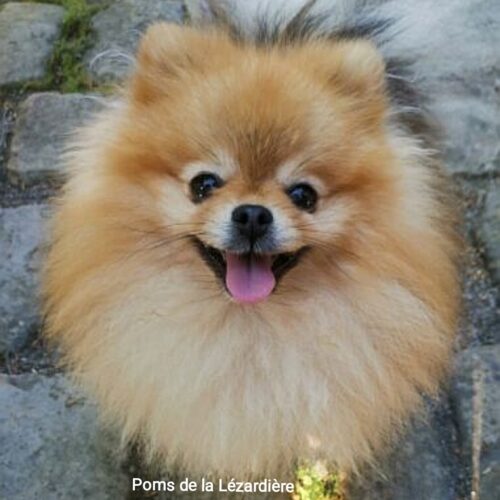
To fully understand the importance of this care, it is essential to address a natural phenomenon specific to the breed: molting periods, key moments when the coat is renewed and requires special attention.

