
The sleep of the puppy and the dog
Sleep is an essential pillar of a dog’s well-being, regardless of age.
It’s not simply about rest, but about genuine physical, mental, and emotional recovery.
A dog sleeps several times during the day, in addition to its nighttime rest. The quality of its sleep directly influences its balance and behavior.
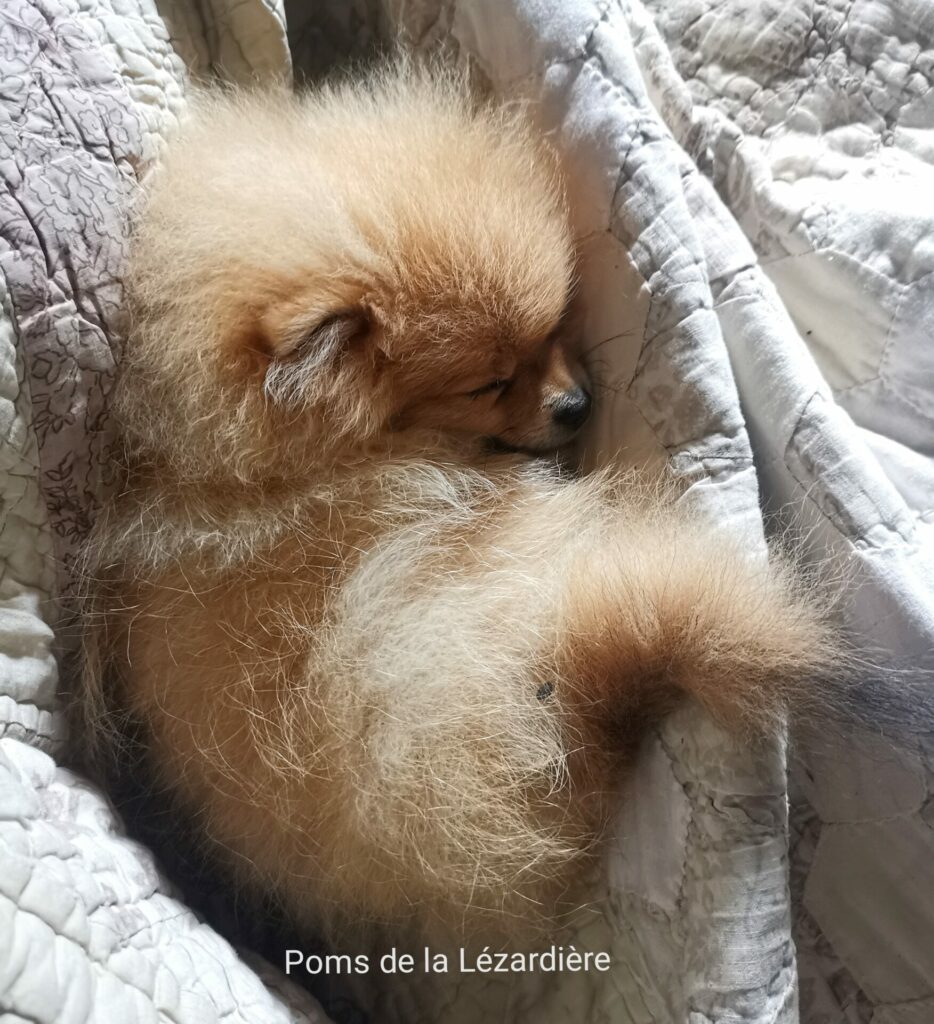
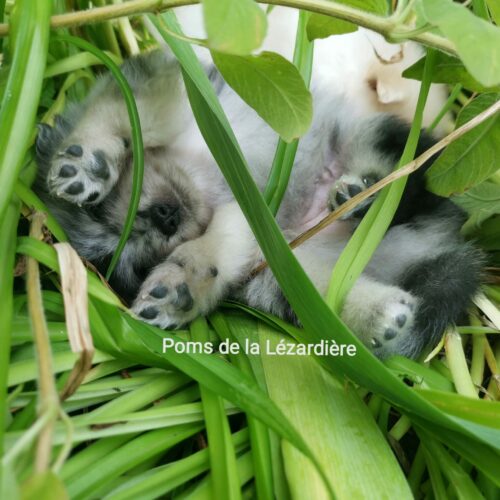
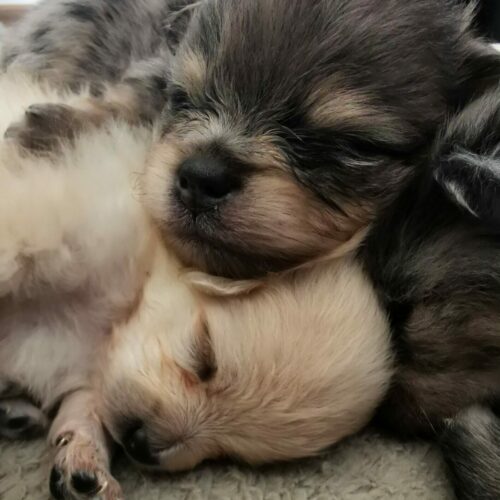
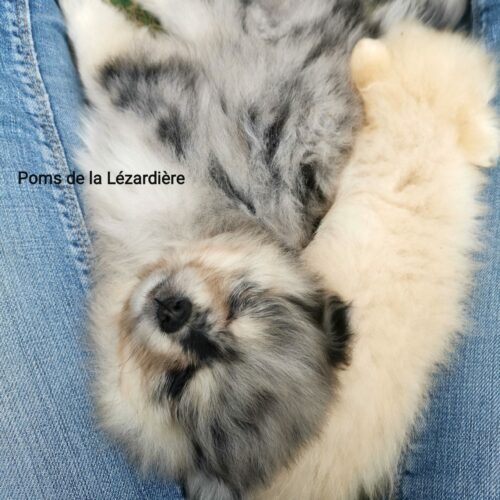
Sleep is essential for the proper development of a puppy.
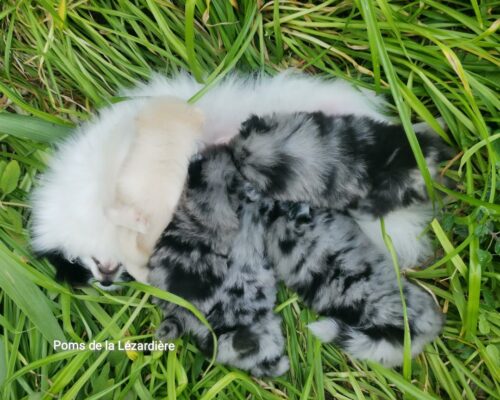
During its first few weeks of life, a puppy needs to sleep between 18 and 20 hours a day. This rest time is essential for its growth, the maturation of its nervous system, and the assimilation of its learning.
During sleep, the puppy “sorts” and integrates the learning acquired during the day: new encounters, new noises, games, handling… A puppy that is too stimulated or not rested enough can become irritable, excited or more sensitive to stress.
Respecting his need for sleep is therefore essential.
He must be able to retreat to a quiet, safe, and comfortable place, away from distractions.
Giving a puppy rest is not depriving it of activities: it is allowing it to grow up peacefully.


Summary of dog sleep patterns according to age
🐾 The puppy
18 to 20 hours a day
The puppy is growing rapidly. Its body and brain are working intensely.
Sleep allows it to:
-
to grow up harmoniously,
-
to develop one’s nervous system,
-
to assimilate what has been learned,
- to be more confident in the face of new things,
-
to regulate one’s emotions,
- be more balanced.
An overstimulated and under-rested puppy can become excited, nipping, or irritable.
🐶 The adult dog
12 to 15 hours per day
An adult dog alternates between periods of activity and rest.
Sleep allows it to:
-
recovering after exercise,
-
to stabilize one’s emotional balance,
-
maintain concentration,
- consolidate one’s learning,
-
to preserve one’s overall health.
This duration can vary depending on several factors: age, breed, activity level, environment, and health. A very active or hard-working dog may need more rest to recover.
A lack of rest can lead to irritability, nervousness, decreased concentration, or increased sensitivity to stress.
It is therefore important to offer him a quiet, comfortable space that is respected by the members of the household, where he can retreat without being disturbed.
A well-rested dog is a calmer, more attentive and more balanced dog on a daily basis.
🐕🦺 The senior dog
14 to 18 hours per day (or more)
As dogs age, they tire more easily.
They sleep more frequently and sometimes more fragmentedly, as their bodies need more recovery time. This allows them to:
-
relieve your joints,
-
recover more easily,
-
preserve your energy.
An older dog needs a calm, comfortable and reassuring environment.
Key takeaway:
Sleep is never wasted time.
It is an essential pillar of a dog’s well-being and balance at every stage of its life.
Sleep phases
Should you wake a dreaming dog?
As a general rule, you shouldn’t wake a dreaming dog.
During REM sleep, it’s normal for him to move his legs, whimper, bark slightly, or startle. This simply means he’s dreaming and his brain is active.
Waking him up abruptly can disorient him. In some cases, a dog startled while dreaming may react reflexively (sudden movement, involuntary growling), without any intention of aggression.
Therefore, it is preferable to:
-
let it complete its cycle naturally.
-
avoid touching it suddenly.
-
Speak softly if you have to call him.
If waking is necessary, do so calmly, calling him by name in a composed voice rather than touching him directly.
Signs of quality sleep
A dog that sleeps well usually shows several reassuring signs.
He falls asleep easily in a calm environment.
His breathing is regular and peaceful.
His body is relaxed, without muscle tension.
He naturally alternates between periods of calm and periods of dreaming.
Upon waking, he is relaxed, stretched, alert, and in a good mood.
Good quality sleep is also noticeable during the day:
the dog is more emotionally stable, more attentive during learning, and less prone to irritability.
Conversely, a tired dog can become:
more nervous,
more excitable,
less focused,
or more sensitive to stimulation.
Providing a quiet, comfortable resting space that is respected by all members of the household is essential to preserving this balance.
WOW !
Incroyablement Top
A dog’s sleeping positions can tell a lot about its personality, health and state of mind.

