
Foods you should never give
They are very harmful and even deadly to our pets.
Animals have a digestive system and metabolism that differ from ours. It is essential to understand that many substances that are harmless or even beneficial to humans can be extremely toxic or even fatal to our pets.
The toxicity of certain types of food can be explained by the presence of specific chemical compounds that their bodies cannot process effectively.
If swallowed, call and consult your vet.
Veterinary Emergencies (free call): 3115
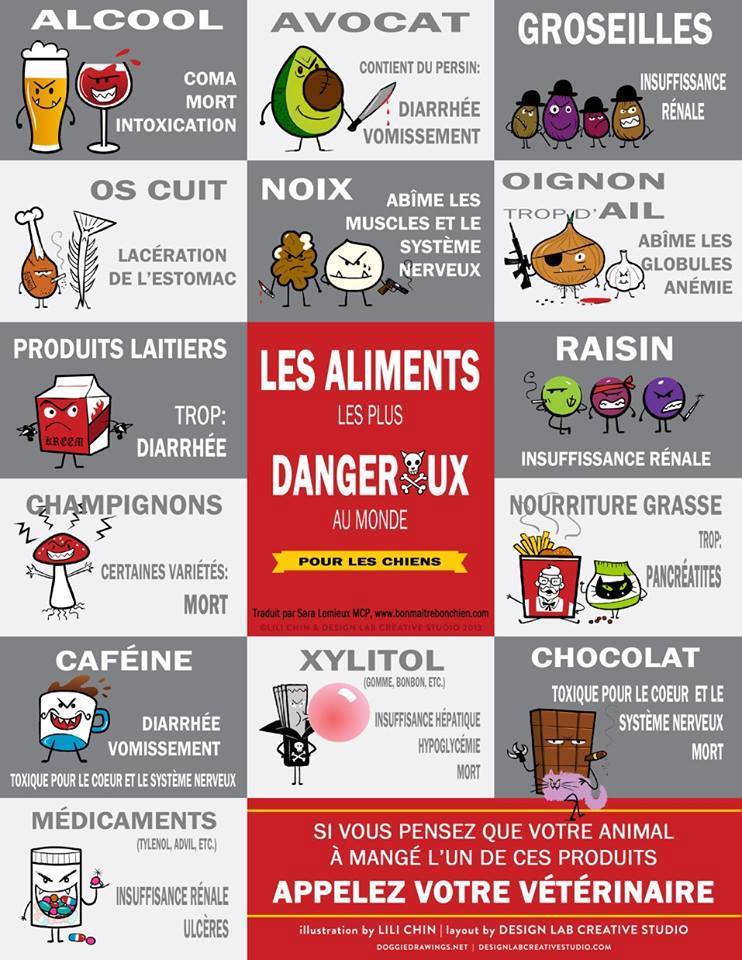
I – Foods to avoid
1- Alcohol
Consuming even a small amount of alcohol can disorient dogs, making them nervous or even aggressive. A large dose can inhibit the central nervous system, breathing and heart rate, leading to death.
The published lethal oral dose of pure ethanol in dogs is 5.5 to 7.9 grams per kilogram of body weight.
2 – Chocolate
Chocolate is dangerous for animals because it contains theobromine, a component that acts as a cardiac stimulant and diuretic. A large piece of chocolate can cause vomiting, diarrhoea and, above all, hyperactivity. Theobromine will either increase the heart rate or cause irregular heartbeats. Death is even possible. Large quantities of chocolate can poison or even kill a large dog.
Dark chocolate and baking chocolate are much more dangerous than milk chocolate. For example, a dose of 55 grams of milk chocolate per kilogram of body weight is potentially lethal, but a much smaller amount of dark chocolate can also be lethal due to its higher theobromine content. This means that the concentration of chocolate is often more important than the amount ingested.
3- Caffeine
Like chocolate, caffeine stimulates the central nervous system and the cardiac systems, and in the hours that follow, it can cause vomiting, agitation, heart palpitations, and even death.
4- Fatty and salted meats
Fatty meats such as ham, pork or beef can cause problems for the pancreas and promote stomach twisting by causing the dog to drink large quantities of water.
Fat trimmings, although often perceived as a treat, can be very dangerous. Their high fat content can trigger pancreatitis, a painful inflammation.
Spicy meats can also be problematic. Spices such as pepper, chilli or curry irritate the stomach and can lead to vomiting and diarrhoea.
Salted meat sausages are very dangerous for dogs. They cause stomach pain and pancreatitis. This is because the salt in these meats can cause unusual water consumption and produce gas that can kill the animal.
5- Bones
Cooked bones are dangerous for dogs. Bones become brittle when cooked, which causes them to splinter when broken. Splinters have sharp edges and can get stuck in teeth, cause choking or perforate the stomach and intestinal walls.
Never give your dog chicken or rabbit bones. Instead, give them beef cartilage.
6- Mushrooms
Just as in humans, mushroom poisoning can be fatal and cause serious liver problems and neurological disorders.
7- Onions, leeks and chives
They are toxic to dogs because they contain allyl and propyl disulphide, which damages red blood cells and can cause death. This means that red blood cells are destroyed prematurely in the blood, while their production rate remains normal.
As little as 5 grams of garlic or onion per kilogram of body weight can be highly toxic, whether the food is fresh, grilled, cooked or dried. This means that cooking does not neutralise the toxins, and even small repeated exposures, for example via table scraps, can accumulate to reach a dangerous dose. Consumption of 15 to 30 grams per kilogram of body weight has led to clinically significant haematological changes.
Poisoning can occur either through ingestion of large quantities or through repeated ingestion of smaller quantities.
The key symptoms of this poisoning include weakness, lethargy, pale gums (a sign of anaemia) and red or brown urine (due to the destruction of red blood cells), as well as shortness of breath.
8- avocado
Avocados are rich in fats.
Avocados contain persin, a fungicidal toxin (i.e. one that kills fungi) found mainly in the pit, skin and sometimes also in the flesh. This substance is toxic to the hearts of domestic animals, including dogs: more specifically, it causes necrosis of the myocardial tissue (the epithelium). However, it is considered harmless to humans.
It causes stomach pain, vomiting, abdominal swelling, cardiorespiratory problems, pulmonary oedema, etc.
9- Green tomatoes, aubergines, peppers and raw potatoes
These raw vegetables contain solanine, a substance that is toxic to our pets.
Sprouted tubers or green parts of potatoes are particularly dangerous. Ingestion can cause abdominal pain, digestive problems and sometimes nervous disorders.
It should be noted that well-cooked potatoes pose no danger.
10- Grapes and dried grapes
Grapes and dried grapes are known to cause acute kidney failure in dogs. The substance responsible for this toxicity is tartaric acid.
The lowest documented toxic dose is remarkably small: between 0.32 and 0.65 ounces (approximately 9 to 18 grams) per kilogram of body weight, which is equivalent to only 4 to 5 grapes. It is important to note that individual dogs’ sensitivity to this toxin is unpredictable, and even small amounts can be dangerous for some animals. Symptoms of toxicity usually appear within 6 to 12 hours after ingestion and include vomiting and/or diarrhoea, lethargy, anorexia, excessive thirst (polydipsia), and dehydration. Elevated serum creatinine and blood urea nitrogen concentrations, markers of renal function, are also observed. The condition may progress to oliguric or anuric renal failure (decreased or absent urine production) within 24 to 48 hours, which can be fatal.
11- The pits, seeds, stems and leaves of fruits (cherries, apricots, peaches, etc.)
Many seeds and pits, stems and leaves contain amygdalin, a substance with a distinctive bitter almond smell. When ingested, it is converted by an enzyme in the digestive system into hydrogen cyanide, which is extremely toxic to dogs, humans and other animals.
Symptoms include vomiting, diarrhoea, breathing difficulties, lethargy…
It is also important to note that fruit and vegetables treated with pesticides can be harmful, even after thorough washing.
12- Lemons and citrus fruits
These fruits contain chemical compounds called psoralens, which damage the liver and can cause poisoning of varying severity (even fatal) depending on the amount ingested. Psoralens are mainly found in the skin and seeds, but are also present in smaller quantities in the flesh.
Various symptoms may appear: vomiting, stomach ache, diarrhoea, etc. In cases of severe poisoning, other symptoms (including neurological symptoms) may appear: tremors, difficulty moving, liver failure, and even death in the most serious cases.
13- Tinned tuna
Tuna provides omega 3 and 6, but does not contain an amino acid called taurine, which maintains heart muscle strength. It also lacks essential nutrients such as vitamins A and D and calcium. In addition, it contains mercury. Tuna is also very high in salt, which can cause serious kidney problems.
Depending on the brand, some boxes contain bisphenol A, which is potentially carcinogenic. Other toxic elements such as arsenic and cadmium may also be detected. As a precautionary measure, it is best to avoid giving them to your pet.
14- Nuts
Cashew nuts and macadamia nuts attack the nervous system and cause digestive problems.
Macadamia nuts contain cyanogenic compounds which, when hydrolysed, release hydrogen cyanide (HCN), a toxic substance that affects dogs’ digestive and nervous systems.
Given that a walnut weighs around 3 grams, this means that just two or three are enough to cause poisoning in smaller breeds of dog, which weigh between 2 and 4 kg.
Symptoms include weakness, depression, vomiting, tremors and hyperthermia. Nerve and muscle damage may also occur. It is important to note that other varieties of nuts, depending on their size, can cause intestinal obstruction if swallowed.
15- Sweet foods
They may contain xylitol, a sweetener that is toxic to dogs. Xylitol can cause a rapid drop in a dog’s blood sugar levels, leading to symptoms such as stomach ache, weakness, convulsions and, in the most serious cases, liver failure. You should also be careful not to leave chewing gum within sight of your pet, as these sweets could kill your pet.
Ingesting more than 0.1 grams of xylitol per kilogram of body weight can cause hypoglycaemia. At doses above 0.5 grams per kilogram, xylitol can cause acute liver failure. The rapid onset of hypoglycaemia and xylitol’s ability to affect two vital organs (the pancreas, which regulates blood sugar levels, and the liver) make this type of poisoning particularly dangerous. Depending on the concentration of xylitol, consuming just one to three pieces of chewing gum can be enough to kill a 10-kilogram dog.
The key symptoms of xylitol poisoning include weakness, lethargy, vomiting, loss of coordination, convulsions, and coma.
16- Raspberries
Raspberries contain xylitol. This is a natural sweetener of plant origin: it has the same taste and sweetening power as sucrose, but without the disadvantages of sugar. This explains why it is commonly used in desserts, sweets, syrups… and all kinds of so-called ‘low-calorie’ products.
Unfortunately, while this sweetener is safe for humans and even cats, it is highly toxic to dogs. When dogs consume it, their bodies produce large amounts of insulin, causing a sudden and potentially fatal drop in blood sugar levels. A few raspberries are not dangerous, but a large quantity can be enough to kill a small dog…
Xylitol is also found in other berries, corn, lettuce, etc., but in smaller quantities.
II Foods to avoid
17- Garlic
Contains a toxic substance, thiosulphate, but it appears to be less toxic than onions and large quantities would need to be consumed to cause poisoning.
18- Milk products
Milk products often have adverse effects due to lactose intolerance, a sugar found in milk and its derivatives. This can cause digestive problems such as diarrhoea, constipation or vomiting. Dogs may also suffer from cramps and, in severe cases, dehydration.
Some individuals may also be sensitive to casein, the main protein in milk, and develop an allergy. It is therefore important to exercise caution and only give them dairy products specifically formulated for dogs, or refrain from giving them any at all.
19- Cabbage, broccoli, turnip
Cauliflower is a source of fibre, vitamin K, potassium and folic acid. All of these are excellent for your dog’s eyes, blood, immune system, liver and muscles.
Broccoli is low in calories and high in fibre. This is good for weight control and for keeping the digestive system working properly.
However, caution is advised as these foods contain isothiocyanates.
Une trop grande quantité de cette substance donnera des maux de ventre à votre chien et peut provoquer de la diarrhée et des vomissements.
Give in small quantities.
20- Redcurrants and blackcurrants
Like redcurrants, blackcurrants cause severe kidney failure in pets, particularly dogs, when ingested. However, the cause of this toxicity is not yet known: it could be due to a mycotoxin present in the fruit, or to substances called salicylates.
This causes kidney failure, which manifests itself in a lack of appetite, diarrhoea, vomiting, abdominal pain, intense thirst, decreased urine output, and lethargy.
21- Egg white
Contains avidin, which destroys biotin, vitamin B8, useful for protein and fat metabolism.
22- Industrial treats
They may contain additives and preservatives that are not suitable for their bodies. In addition, they are often high in sugar and fat, which can lead to obesity and other health problems such as diabetes.
23- Bread
Baker’s yeast, found in raw bread dough, is toxic. It can cause alcohol poisoning because yeast ferments the sugars in the dough into alcohol.
Raw yeast dough poses a double danger. Firstly, the fermentation of yeast in a dog’s stomach produces alcohol, leading to alcohol poisoning similar to that caused by direct alcohol consumption. Secondly, this fermentation also generates carbon dioxide, which causes gas build-up and abdominal distension. This distension can progress to gastric dilatation and volvulus, a potentially fatal condition in which the stomach twists on itself.
Some speciality breads may contain toxic ingredients such as dark chocolate, garlic, onion or raisins.
It is therefore preferable to give your pet plain bread or avoid giving it bread altogether, especially if you do not know its exact composition. Bread has little nutritional value and can contribute to your pet becoming overweight.
Contrary to popular belief, hard bread is not beneficial for oral hygiene.
24- Rhubarb
Les feuilles de rhubarbe sont toxiques en raison de leur teneur en glucosides d’anthraquinone et en acide oxalique, qui provoquent vomissements et diarrhées.
Emergency numbers:
References: